
India’s total foodgrain production rose 5 per cent to a record 376.56 million tonnes in the 2025-26 crop year ending June, driven by all-time high output of rice, wheat and maize, according to the third advance estimates released by the Ministry of Agriculture and Farmers’ Welfare on Wednesday .
Union Agriculture Minister Shivraj Singh Chouhan termed it the highest-ever foodgrain output in the country’s history, crediting farmers and the government’s policy support for the achievement .
Record production across major cereals
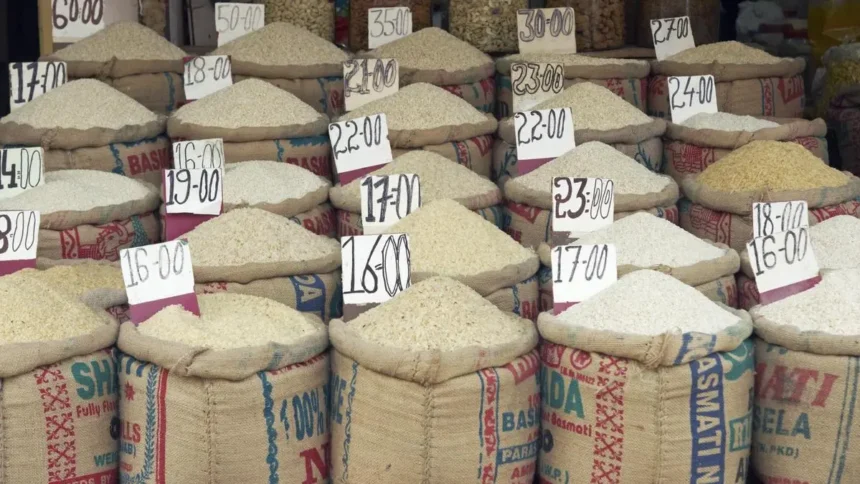
Rice production is estimated to touch a record 154.02 million tonnes, up from 150.18 million tonnes in 2024-25, making India the world’s top rice producer .
Wheat output is projected at 120.65 million tonnes, a 2.29 per cent increase over last year’s 117.94 million tonnes. The ministry noted that wheat production remained “stable and resilient” despite localised damage from unseasonal rains and hailstorms in some growing regions .
Maize production crossed the 50 million tonne mark for the first time, reaching a record 55.09 million tonnes — a sharp 27 per cent increase from 43.41 million tonnes in the previous year .
Mixed performance in other crops
Pulses production rose 6.7 per cent to 27.41 million tonnes, with gram (chana) output increasing to 12.51 million tonnes from 11.11 million tonnes .
Oilseeds production remained stable at 43.06 million tonnes, with mustard reaching a record 13.77 million tonnes. However, soybean output dipped to 12.6 million tonnes from 15.27 million tonnes .
Nutri-cereals (millets, jowar, ragi) saw a 5.4 per cent decline to 17.58 million tonnes from 18.59 million tonnes .
Among commercial crops, sugarcane production is estimated at a record 500.06 million tonnes, while cotton output is pegged at 29.02 million bales (170 kg each), slightly lower than last year’s 29.72 million bales .
Drivers of bumper output
Better monsoon rains in 2025, along with the government’s initiatives such as a hike in minimum support prices (MSP) for Kharif crops, supported the record production. The Indian Council of Agricultural Research’s (ICAR) development of climate-resilient crop varieties also played a pivotal role .
“The Third Advance Estimates clearly indicate that the production position of foodgrains, major cereals, oilseeds and commercial crops in the country remains robust, with several crops projected to achieve record production levels,” the ministry said in a statement .
Outlook and challenges
Experts see the robust production as a buffer to help the country navigate potential risks in the current year amid forecasts of a below-normal monsoon due to the El Niño weather pattern, which is associated with erratic rainfall .
Agri-policy expert Pravesh Sharma noted that the focus should now shift to strengthening market linkages, storage facilities and value chains so that higher production translates into better income for farmers .
Meanwhile, an intense heatwave across North India has begun affecting basmati rice supply chains and textile production, with productivity falling 15-20 per cent over the last fortnight due to workers being unable to operate during afternoon hours . This could impact exports in the coming months.