
India’s aggressive pursuit of free trade agreements is beginning to transform the country’s agricultural and food processing export landscape. With landmark deals concluded with the European Union and the United Kingdom, Indian farmers and food processors are gaining unprecedented access to two of the world’s largest and most lucrative markets.
The EU Breakthrough
On January 27, 2026, Prime Minister Narendra Modi and European Commission President Ursula von der Leyen jointly announced the conclusion of the India–EU Free Trade Agreement, a strategic breakthrough after over a decade of negotiations .
Under the agreement, over 99% of Indian exports gain preferential entry into the EU, which accounts for 12-13% of India’s total agricultural exports, valued at approximately $4.4-4.8 billion annually .
Specific gains for the agri and processed food sector include:
- Immediate zero-duty access on 70% of tariff lines covering tea, coffee, spices, fresh fruits and vegetables, table grapes, gherkins, cucumbers, and dried onion
- Gradual duty elimination on another 20% of tariff lines for processed foods and certain marine products over three to five years
- Reduced tariffs on marine products from 4.2-7.5% to nil, benefiting shrimp, frozen fish, and value-added seafood exports
India has strategically safeguarded sensitive sectors including dairy, cereals, poultry, soymeal, and certain fruits and vegetables, protecting the livelihoods of small and marginal farmers .
The UK Agreement: Near-Zero Access
The India-UK Comprehensive Economic and Trade Agreement (CETA), signed in July 2025, grants zero-duty access for over 95% of India’s agricultural and processed food exports .
Key beneficiaries include:
- Spices such as turmeric, cardamom, and pulses
- Marine products including shrimp and tuna
- Processed foods like mango pulp and packaged agricultural goods
- Horticultural products from Maharashtra (grapes, onions) and the Northeast
As with the EU deal, India has excluded politically sensitive items such as dairy, edible oils, apples, and oats from full liberalization .
The UAE CEPA Effect
The Comprehensive Economic Partnership Agreement (CEPA) with the UAE, operational since 2022, has already demonstrated the transformative potential of trade pacts. UAE has emerged as India’s third-largest trading partner and second-largest export market, accounting for 9% of India’s total foreign trade and 14% of non-oil exports .
At the India Rising session during Gulfood 2026, industry leaders highlighted how CEPA has strengthened supply chains for value-added food products, with flagship Indian companies including AMUL, Dabur, and Mother Dairy expanding their footprint in GCC markets .
Sector-Wise Impact
Spices and Condiments
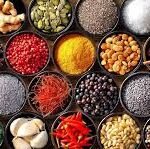
The EU is a critical market for Indian spices, and the FTA is expected to significantly boost competitiveness. Turmeric, cardamom, and other spices now face reduced or eliminated tariffs, leveling the playing field with competitors from other geographies .
Marine Products
India’s marine exports to the EU, currently valued at approximately $1 billion, are poised for significant expansion. The Seafood Exporters Association of India (SEAI) reports that exports to the EU have already increased by 28% in quantity and 37.8% in value during the current financial year .
“The FTA will turbo-charge exports of shrimp, frozen fish, and value-added seafood exports, empowering coastal communities in Andhra Pradesh, Gujarat, Kerala, and beyond,” the Commerce Ministry stated .
Table Grapes and Gherkins
Indian table grape exporters currently pay an 8% duty on shipments to Europe. With elimination of this tariff under the FTA, exports are expected to expand significantly from the current ₹3,000 crore level .
The gherkin sector, facing a 14.4% duty in Europe while competitors like Turkey enjoy zero-duty access, will now compete on equal terms. “It is a huge boost for us,” said GM Vinod of the Indian Gherkin Exporters Association .
Processed Foods
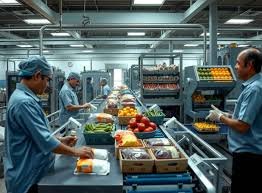
For the processed food sector, the FTAs are particularly transformative. The EU FTA includes provisions for streamlined Sanitary and Phytosanitary (SPS) procedures, regulatory transparency, and customs facilitation—addressing long-standing compliance challenges .
Challenges and the Road Ahead
While the agreements promise significant opportunities, substantial challenges remain. The EU maintains stringent food safety standards, and Indian exporters must upgrade traceability, quality control, and certification systems to fully benefit .
The tea industry, for instance, faces not tariff barriers but chemical residue restrictions that may limit exports despite the FTA’s tariff concessions .
Experts estimate that with proper implementation and domestic policy support, India’s agri-food exports to the EU could increase by $2.5-3.5 billion, taking India-EU trade to $7-8 billion . For the UK, agri exports are expected to rise over 20% within three years, though marketing muscle and infrastructure upgrades remain critical .
Conclusion
India’s expanding FTAs represent a strategic shift in the country’s trade architecture. For the agri and food processing sector, these agreements offer a pathway from commodity-led exports to value-driven, quality-focused global partnerships. The benefits, however, will materialize only with strong domestic policy support, investment in quality infrastructure, and alignment with international standards .