

The benchmark measure for world food commodity prices eased slightly in September 2026, driven primarily by sharp declines in sugar and dairy quotations, according to new data released by the Food and Agriculture Organization of the United Nations (FAO) .
The FAO Food Price Index, which tracks monthly changes in the international prices of a basket of globally-traded food commodities, averaged 128.8 points in September, down from a revised 129.7 points in August . Despite the monthly decline, the index remained 3.4% higher than its year-earlier level .
Sugar Prices Drop to Lowest Level Since 2021
The FAO Sugar Price Index recorded the most significant decline, dropping 4.1% in September . This marked the index’s lowest level since March 2021, reflecting substantial downward pressure on global sugar markets .
The decline was attributed to higher-than-expected production in Brazil, the world’s largest sugar producer, as well as strong harvest prospects in India and Thailand . These supply-side factors outweighed concerns about weather-related risks in other growing regions.
Dairy Prices Ease Amid Weaker Demand
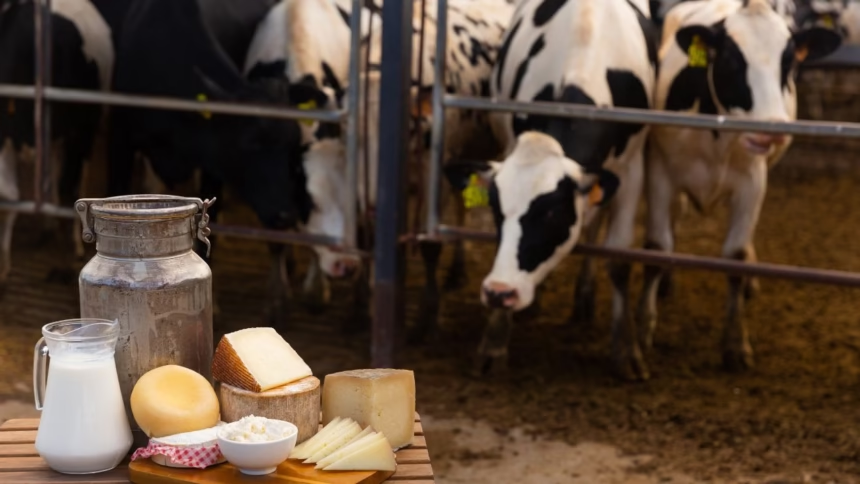
The FAO Dairy Price Index fell 2.6% in September, continuing a trend of moderation in dairy markets . The decline was led by lower butter and milk powder quotations, reflecting softer global import demand and increased export competition among major dairy-exporting nations .
Cheese prices remained relatively stable during the month, while skim milk powder prices showed mixed developments across different markets.
Cereal Prices Present Mixed Picture
While the overall index declined, cereal markets showed varied trends during September. Global wheat prices came under pressure from improved supply prospects in several key exporting regions, though continued uncertainty affecting Black Sea trade routes provided some support to prices.
Maize quotations remained supported by firm demand from animal feed and industrial ethanol sectors in key importing countries. Rice markets showed relative stability as new season supplies began reaching international markets.
Outlook
FAO experts noted that while global food commodity markets have remained broadly resilient, continued uncertainty affecting key trade routes remains a concern. The Strait of Hormuz situation and its impact on energy and fertilizer markets could place additional pressure on food prices in the coming months, highlighting the need for coordinated international action .
The next edition of the FAO Food Price Index will be released on November 6, 2026 .