
New Delhi, India – India’s ambitious goal of achieving Net Zero emissions by 2070 requires a sector-wide transformation, and agriculture—one of the nation’s largest employers and a sector most vulnerable to climate change—is poised to play a pivotal role. An op-ed by Akshat Seth, MD & CEO of BirlaNu, highlights an often-overlooked opportunity: the millions of rooftops across India’s farms. Properly designed and durably built, these rooftops can serve as energy platforms, climate adaptation tools, and enablers of more resilient agriculture, significantly advancing India’s clean energy transition.
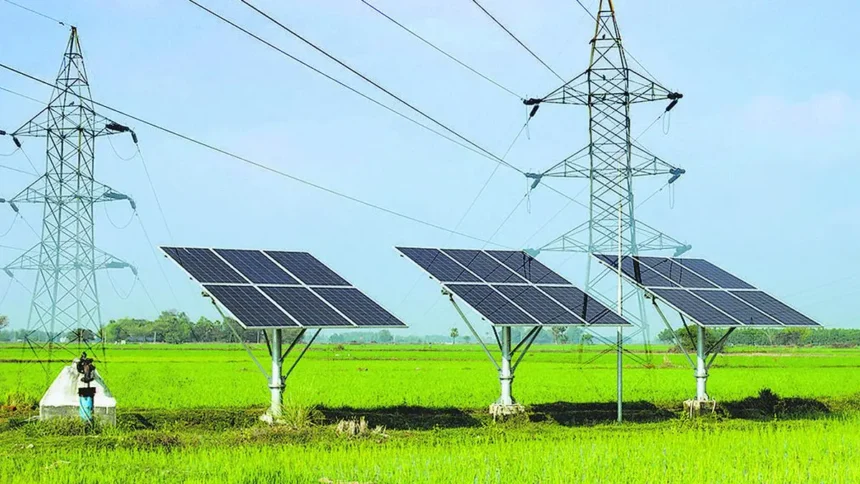
India’s agricultural landscape, spanning nearly 60% of the country’s total land area, holds immense solar potential. A 2024 study estimated the technical potential for agri-photovoltaics at between 3,156 GW and 13,803 GW, far exceeding India’s current installed electricity generation capacity of over 500 GW. Existing government schemes like PM-KUSUM and PM Surya Ghar are already demonstrating what is possible, with over 10,203 MW of agricultural solar capacity installed under the former and 14.43 lakh rooftop systems added in 2025 alone under the latter. However, the op-ed argues that the long-term success of such installations hinges on the quality and durability of the roofing systems that support them.
A major challenge is the dominance of conventional metal sheet roofing on farm structures. These roofs can exceed surface temperatures of 50 degrees Celsius, causing solar panels to operate less efficiently and degrade faster. Seth advocates for thermally efficient, high solar reflectance roofing systems, such as fibre cement roofing with High Solar Reflectance Index coatings, which can reduce heat gain, improve thermal comfort, and create better conditions for solar installations. Durability is equally critical; solar panels are designed for a 25-year lifecycle, requiring roofing systems capable of carrying structural loads and maintaining weatherproofing throughout that period. Premature roof replacement can significantly undermine the economic benefits of the solar investment.
The op-ed emphasizes that climate change is making roofing performance more demanding, with extreme heat, unseasonal rainfall, high winds, and hailstorms placing rural structures under increasing stress. Investing in climate-resilient roofing is therefore a strategic necessity. Seth concludes that unlocking the full potential of India’s agricultural solar opportunity requires treating rural built infrastructure as a strategic national asset. “The roof over India’s farms is no longer just a shelter,” he writes. “Properly designed and durably built, it becomes an energy platform, a climate adaptation tool, and an enabler of more resilient agriculture.”