
It’s never too early to think about harvest success, and Dan Koehler suggested farmers should build their planting plan around harvest management. The Dekalb/Asgrow technical agronomist said, “The goal is to harvest soybeans at 13% to 15% moisture and corn at 20% to 25% moisture. … If you plant early and plan strategically, you can avoid harvesting soybeans at 8% or corn below 15%, which sacrifices yield.”
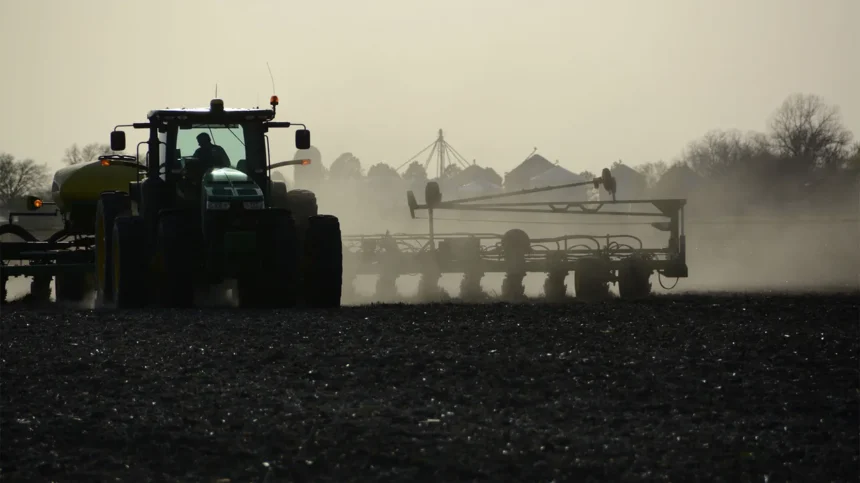
That strategic planning means getting the planter rolling as early as possible. “If the conditions are there, I want to see planters rolling by April 20,” he said. Producers should check with their agronomist or crop consultant for that date in their area, as well as the crop insurance target date.
Managing Corn Maturities
Koehler advised farmers to plant some early-maturing corn first to help with harvest management. “The goal is to prevent everything from drying down at the same time in the fall,” Koehler said. By planting early corn early and then moving on to your later corn, you will hopefully be able to harvest more corn in the 20% to 25% moisture range.
Soybeans First, or Simultaneously
The trend the last few years has been to plant soybeans earlier and earlier, and Koehler suggested that in a perfect world, farmers would have a corn planter and a soybean planter going at the same time.
Harvest management starts with a solid planting plan. Koehler recommends planting early-maturing soybeans first, followed by later-maturity groups. “If you plant a Group 1.0 soybean early, you’re waiting for it to hit 13% moisture, and then you can move on to the 1.4 and 1.8 groups,” he explained. “This strategy ensures you’re harvesting at the right time and maximizing yield.”
The “Too Early” Question
Sergio Cabello Leiva agreed that everyone wants to plant soybeans early, “but nobody wants to plant too early. But what is too early in practical terms? I would say below 55 Fahrenheit in the soil, I will not plant soybeans.”
Cabello Leiva is the director of research for the Minnesota Soybean Research & Promotion Council, and he said that soybeans have resiliency built in. “Soybeans will germinate and emerge. You can plant 150,000 seeds per acre, and probably with 90,000, you’re still going to get full potential,” he said. “Soybeans are really ‘plastic,’ you know, compared with corn or even wheat. They can cover. They can compensate.”
That compensation goes only so far if the seed is compromised by diseases such as sudden death syndrome or brown stem rot. “SDS and brown stem rot like to enter the seed when it’s cool and the plant is struggling to emerge. So, let’s plant early, just not too early,” Cabello Leiva said.
Disease and Insect Management
The best plan for an optimum harvest can be derailed when diseases get in the way. Koehler stressed the importance of selecting hybrids and varieties with strong disease tolerance. “White mold, iron deficiency chlorosis, sudden death syndrome and soybean cyst nematode are key concerns for soybeans,” he said. “For corn, Goss’s wilt, tar spot and southern rust are top of mind.”
While hybrid tolerance is essential, fungicides play a significant role in managing diseases like tar spot and southern rust. “Southern rust doesn’t overwinter in the U.S., but we’ve seen it two years in a row now,” Koehler said. “Tar spot, on the other hand, overwinters in residue, so it’s a consistent threat.”
In addition to fungal diseases, Koehler warned not to forget about insect infestations. He said more extended diapause last year from the northern corn rootworm is concerning, encouraging growers to consider belowground protection. “Because of the uptick in extended diapause, we’ve seen more above and or belowground traits being sold.”
Knowing a field’s disease and insect pressure history is key, and regular scouting is imperative to be ready to protect the growing crop.