

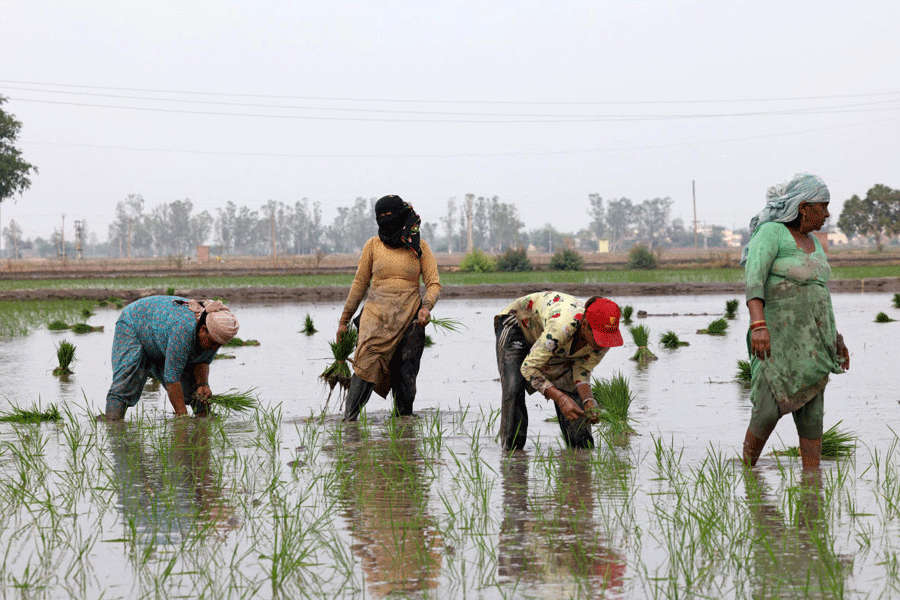
India’s ascension to become the world’s largest rice producer in 2025 should have been a moment of national pride. With rice exports nearly doubling over the past decade to exceed 20 million metric tons, the country now commands 40% of the global rice trade. Yet beneath this agricultural triumph lies an alarming environmental crisis that threatens the livelihoods of millions of farmers and the sustainability of India’s water resources.
In the heartland states of Punjab and Haryana, rice farmers are confronting a harsh reality that contradicts the government’s celebration of record harvests. Groundwater levels that were accessible at just 30 feet a decade ago now require borewells reaching depths of 80 to 200 feet, forcing farmers to invest heavily in deeper drilling equipment and more powerful pumps.
The scale of water consumption in rice cultivation is staggering. Each kilogram of rice requires between 3,000 and 4,000 liters of water, which represents 20% to 60% more than the global average. For a nation where rice sustains over 65% of its 1.4 billion population, this water-intensive crop is creating an unsustainable drain on precious groundwater reserves.
Government data for 2024 and 2025 reveals that Punjab and Haryana extract between 35% and 57% more groundwater annually than their aquifers can naturally replenish. Large portions of these agricultural regions are now officially classified as “over-exploited” or at “critical” levels, triggering borewell bans in the most severely affected zones since 2023.
The financial burden on farmers is mounting. Balkar Singh, a 50-year-old farmer from Haryana, expressed the growing frustration shared by many in the farming community. The cost of drilling deeper wells and purchasing more powerful extraction equipment is creating a debt trap, particularly for small-scale subsistence farmers who lack the resources of their larger counterparts.
Government subsidies designed decades ago when India struggled with food security are now perpetuating the crisis. These include guaranteed minimum support prices that have increased by approximately 70% over the past decade, alongside substantial power subsidies that effectively encourage excessive groundwater extraction. Experts argue that these policies disincentive farmers from transitioning to less water-intensive alternatives like millets or pulses.
The situation is further complicated by climate vulnerability. Despite strong monsoon seasons in recent years, extraction rates have far outpaced natural aquifer recharge. As climate patterns become increasingly unpredictable, farmers dependent on groundwater face mounting uncertainty about their agricultural future.
Some policy shifts are emerging. Haryana launched a program offering subsidies of 17,500 rupees per hectare to encourage crop diversification toward less thirsty alternatives. However, these initiatives remain modest compared to the scale of entrenched rice subsidies that continue to drive production decisions.
The geopolitical implications extend beyond India’s borders. With the country feeding a population of over 1.4 billion people while simultaneously dominating global rice exports, any production disruptions would ripple through international food markets. This raises critical questions about whether one of the world’s most water-stressed nations should be exporting virtual water through rice shipments.
As India grapples with this paradox of agricultural success and environmental sustainability, the urgency for comprehensive reform grows. Without significant policy interventions to balance food security objectives with water conservation, the nation risks transforming its breadbasket regions into depleted wastelands, threatening both domestic food security and the livelihoods of millions dependent on agriculture.