
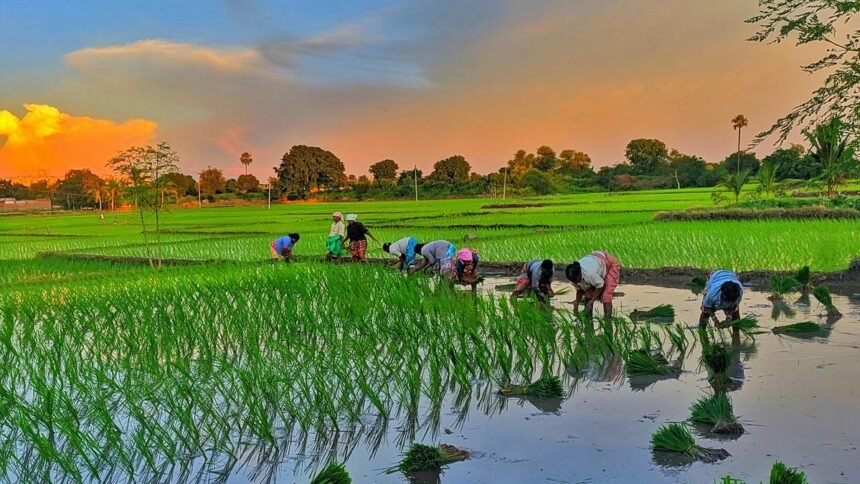
Bengaluru, India – Irrigated paddy fields in India have emerged as among the world’s most significant methane hotspots, according to a new study published in the journal Nature Food. The research found that these fields release approximately 3.9 million tonnes of methane every year—a figure that slightly exceeds the entire annual methane emissions of Germany. This finding comes as the study reveals that global greenhouse gas (GHG) emissions from paddy fields have more than doubled since the 1960s.
The study, which analyzed emissions data from 1961 to 2020, reported that in the most recent decade (2011-2020), paddy fields worldwide produced around 1.1 billion tonnes of carbon dioxide-equivalent (CO2-e) emissions annually. This represents a 90.4% increase compared to the annual emissions between 1961 and 1980. The researchers identified two primary drivers for this surge: the loss of soil organic carbon and methane production. Between 1961 and 1980, paddy fields acted as carbon sinks, removing approximately 289 million tonnes of CO2-e annually. However, this sink has weakened significantly over time, and by the 2010s, over a third of global paddy fields were losing carbon from the soil.
Methane emissions, produced by microbes thriving in the low-oxygen conditions of flooded fields, are a major contributor to the problem. Eastern India’s paddy fields were specifically identified as global methane hotspots, underscoring the significant role of the region’s agricultural practices in climate change. The study’s findings highlight the urgent need for sustainable rice cultivation practices, such as the adoption of Direct Seeded Rice (DSR) and improved water management, which can mitigate methane emissions while maintaining productivity. As one of the world’s largest rice producers, India’s contribution to global methane emissions from paddy fields is a critical factor in international climate change mitigation efforts.