
Renewable natural gas producers say one cow’s waste can become a farmer’s treasure, creating new revenue streams while reducing environmental impact
Everyone has heard one man’s trash is another man’s treasure. But can one cow’s waste be a farmer’s treasure? Renewable natural gas (RNG) producers say yes.
A growing opportunity
“As long as our planet is populated by human beings, and as long as we’re feeding our family with food, there’s always going to be some organic waste,” says Johannes Escudero, founder and CEO of RNG Coalition, the North American RNG trade association. “It’s going to break down over time and produce methane. We are capturing that methane and converting what is an environmental liability into an asset, in the form of renewable energy.”
According to Escudero, in the past decade North America’s RNG industry has grown from just 31 operating facilities to 268 with 235 in development. RNG Coalition has identified 43,000 sites, including farms, wastewater treatment facilities, and landfills across North America and is working to capture methane from each by 2050.
Boosting farm profitability
Escudero says many of North America’s agricultural and livestock operations have sufficient volumes of waste to successfully support RNG facilities, and it can create a new revenue stream for farmers.
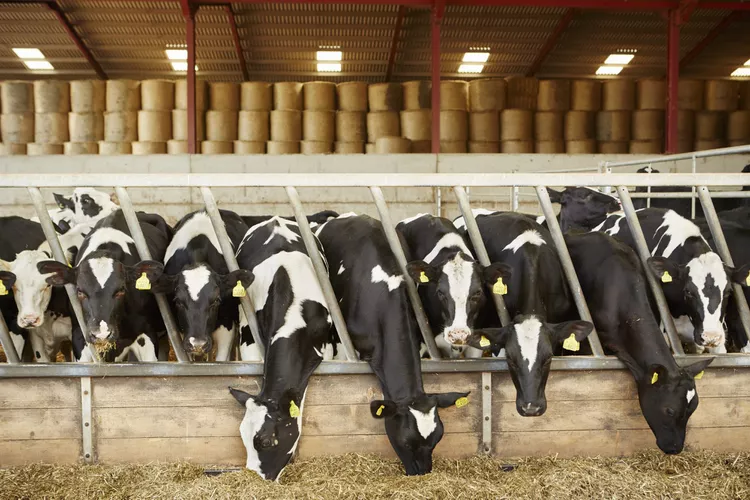
Danielle Goodrich and her family run a dairy farm in Salisbury, Vermont. They partnered with Vanguard Renewables to build an RNG digester on their property. Vanguard covered the construction costs and runs the day-to-day operations. Goodrich receives a monthly fee for use of the land and manure.
“In an industry that is so volatile, such as the dairy industry, having a set income every month is hugely beneficial,” Goodrich says.
The Vanguard model
The Goodrich farm is one of six Vanguard facilities turning manure from small dairies and food waste from sources such as grocery stores into RNG. Vanguard has plans to open 60 similar facilities across the United States and expand its program focused exclusively on large dairies over the next four to five years.
“The American farmer is the backbone of our country, and I think sometimes as people fly from the East Coast to the West Coast, they forget about what happens in the middle and the importance of the American farmer to our economy and to our lives,” says Kevin Chase, cofounder of Vanguard Renewables.
Additional benefits
Chase says a cash payment, which varies based on the size of the dairy, is just one of many ways the company helps improve farm profitability.
The RNG production process also produces a co-product called digestate, which can be used as fertilizer. The process also pulls out solids that can be used as animal bedding. Vanguard shares these products with its farm partners at no cost.
“We’ve also seen in most of our dairies that the use of this [digestate] gets them a higher yield on their corn and their hay because the process of putting the material through the digester turns the N (nitrogen), P (phosphorus), and K (potassium) into a more plant-available form,” Chase says.
Producers can also strip out nutrients from the digestate if the land has too much of a given nutrient or recycle the digestate water into a usable state.
Do your research
For farmers considering an RNG project, Goodrich says do the research and communicate with the RNG developer about goals and expectations. She says to ask company officials where they see the company in 20 years.