

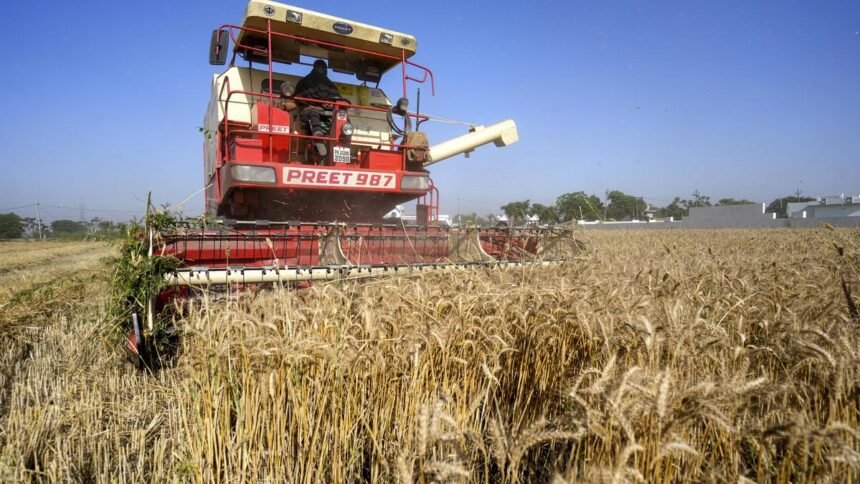
Extreme heat is pushing global agrifood systems to the brink, threatening the livelihoods and health of more than a billion people, according to a new report by the United Nations Food and Agriculture Organization (FAO) and the World Meteorological Organization (WMO).
The agencies said heatwaves are becoming more frequent, intense and prolonged, damaging crops, livestock, fisheries and forests.
Impact on crops
The report said higher temperatures are shrinking the safety margin that plants, animals and humans rely on to function, with yields for most major crops falling once temperatures exceed about 30°C.
Beyond just dehydration, extreme heat disrupts the rest period of plants. High nighttime temperatures force crops to maintain high respiration rates after dark, consuming the energy stores they built through photosynthesis during the day. This exhaustion stunts growth and leads to pollen sterility in staple crops like maize and rice.
Kaveh Zahedi, head of FAO’s climate change office, told Reuters that every one-degree rise in average global temperatures cuts yields of maize, rice, soya and wheat by around 6%.
Livestock under stress
For livestock, the report details a thermal humidity index that, when breached, triggers acute heat stress. In dairy cattle, this manifests as a 15% to 25% drop in milk production and significant drops in fertility rates.
Scientists have noted similar stressors in poultry, where extreme temperature spikes can lead to mass mortality events in facilities without industrial-level climate control.
A real-world example
Zahedi cited Morocco, where six years of drought were followed by record heatwaves. “This led to a fall in cereal yields by over 40%. It decimated the olive and citrus harvest. Basically, those harvests failed,” he said.
Marine heatwaves threaten oceans
Marine heatwaves are also becoming more frequent, depleting oxygen levels in water and threatening fish stocks. In 2024, 91% of the world’s oceans experienced at least one marine heatwave, the report said.
Risks will worsen
Risks rise sharply as warming accelerates. The intensity of extreme heat events is expected to roughly double at 2°C of warming and quadruple at 3°C, compared to 1.5°C.
“Extreme heat is rewriting the script on what farmers, fishers and foresters can grow and when they can grow. In some cases it is even dictating if they can still work,” Zahedi said. “At its core, this report is telling us that we face a very uncertain future.”
What needs to be done
The FAO and WMO said piecemeal responses were inadequate and called for better risk governance and early-warning weather systems to help farmers and fishers take preventive action.
The crisis extends beyond the field to the cold chain – the refrigerated supply line required to move food. But the report said adaptation alone is not enough, arguing the only lasting solution is ambitious, coordinated action to curb climate change.
Recent climate datasets show global warming is accelerating, with 2025 ranking among the three hottest years on record, triggering more frequent and severe weather extremes. The window for action, the report suggests, is closing fast.