
The ongoing conflict in West Asia has severely disrupted mango exports from Karnataka, forcing growers who traditionally relied on Gulf markets to scramble for alternatives. With the key export season underway, farmers, exporters, and state agencies are pivoting toward Western markets, online sales, and direct local retail to salvage the season .
The crisis has effectively shut down shipments to major buyers like the UAE, which typically accounts for the largest share of India’s annual mango exports of around 30,000 metric tonnes . Consequently, Karnataka’s mango sector is facing a significant revenue gap.
Export Shift: From Gulf to the West
In response to the trade standstill, Karnataka has successfully redirected a portion of its premium produce. The state has exported over 183 tonnes of mangoes this season to the US, UK, Australia and Europe—markets that were once secondary but are now critical .
B C Muddugangadhar, chairman of the Karnataka State Mango Development and Marketing Corporation Ltd, highlighted the potential in these new markets. “Our Mallika, Kesar and Badami varieties have great potential. Once they taste our authentic Alphonso or Kesar, they will love it,” he said .
However, accessing these premium markets requires overcoming strict safety protocols. While shipments to Europe and the UK are moving, exports to the US and Australia necessitate “special treatment,” including gamma radiation to clear out tiny insects .
The Root Cause: Shipping and Freight Crisis
The disruption stems from a complete logistical breakdown. The closure of the Strait of Hormuz has stalled shipments, leaving growers with unsold inventory. Freight costs have tripled: air cargo charges for mangoes have surged to between ₹800 and ₹900 per kg, up from around ₹250 .
Rajendra Poddar, president of the Dharwad Mango Growers Group, captured the anxiety of the farming community. “As long as the war is there, exporting to any country is difficult. We pray the war ends. But if the war doesn’t end, then we have to think of alternative ways,” he told international media .
Ground Reality: Local Markets and Pulp Processing
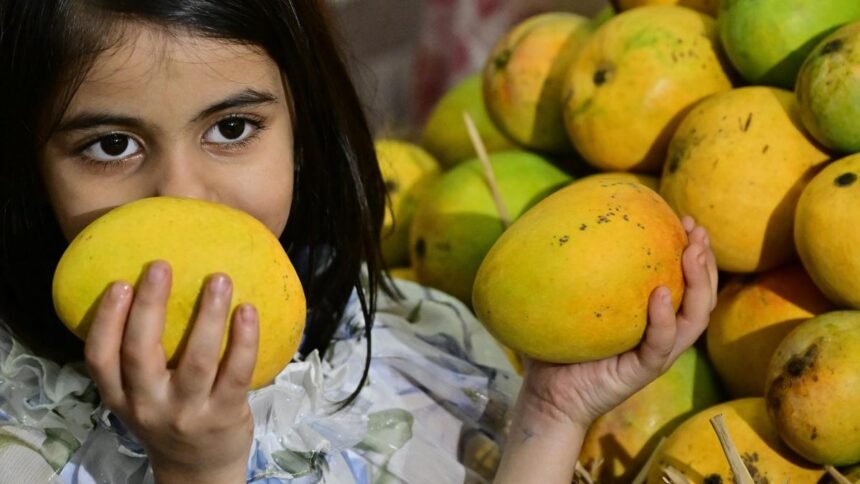
The disruption has flooded the domestic supply chain, driving down wholesale prices. Harvests are arriving in markets like K.R. Market in Bengaluru, where prices remain moderate. As of late May, Alphonso was retailing at ₹280–300 per kg, Raspuri at around ₹250, and Banganapalle at ₹180–200 .
With fewer orders coming in, exporters are grappling with high costs and low demand. “Our regular buyers did not turn up this year. Some who came did not confirm orders, and a few did not make payments,” a trader told The Hindu . At the farm level, production costs are estimated at ₹12,000 per tonne, but farmers are receiving as little as ₹4,000, squeezing their margins severely .
Government Intervention and Future Plans
To mitigate the crisis, the Karnataka government has intervened to create direct marketing channels. The Mango Corporation is setting up free, government-run stalls in Kolar and Chikkaballapur—districts that grow nearly 60% of the state’s mangoes—to allow farmers to bypass middlemen . Additionally, efforts are underway to train women’s self-help groups in making value-added products like mango bars, pulp, and pickles to extend shelf life and create revenue streams .
As the peak harvest continues, the resilience of Karnataka’s mango sector is being tested. By pivoting to Western markets and strengthening local distribution networks, farmers are attempting to weather the storm, hoping for a swift resolution to the geopolitical deadlock before the season spoils.