

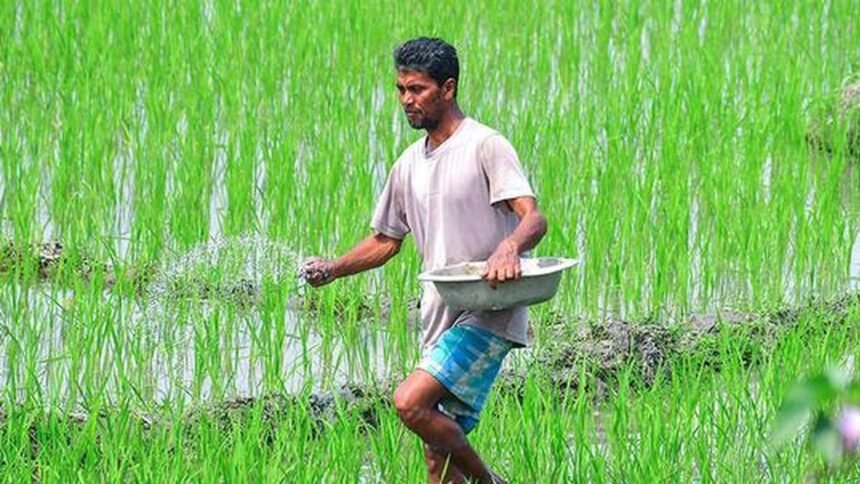
The Fertiliser Association of India (FAI) has assured that Urea and Phosphatic fertilizer supplies remain adequate to meet agricultural requirements for the forthcoming Kharif season, despite concerns over global geopolitical tensions and their potential impact on trade and logistics .
According to the Ministry of Fertilizers, the overall stock position of fertilizers in the country to meet the requirement of farmers in the current Kharif season is comfortable. For Kharif 2026, the fertilizer requirement has been reassessed at 383.9 lakh metric tonnes (LMT) . Against this, the stock as on date is around 197.56 LMT, which is more than 51 per cent of the required amount and significantly higher than the usual level of about 33 per cent that is usually stocked at this point of the year .
“At present, the immediate availability of fertilisers looks to be okay. The stock will be sufficient to meet the requirement of the forthcoming kharif season,” FAI Director General Chaudhari Suresh Kumar told PTI .
Inventory levels comfortable
As per official data, DAP (di-ammonium phosphate) and NPK inventories have gone up by 70-80 per cent over last year’s corresponding period, giving adequate comfort to manage any temporary disruption in supplies from the Middle East . The government has also floated a global tender for the procurement of 17 LMT of urea, which is currently in progress .
Supply chain diversification efforts
While global developments, including geopolitical tensions in West Asia, have raised concerns about potential disruptions to fertilizer trade and logistics, current inventory levels and supply arrangements are expected to provide a sufficient cushion to meet agricultural demand .
In the case of Phosphatic fertilizers, India has diversified supplies and long-term arrangements, sourcing from nations such as Morocco, Jordan, Saudi Arabia, Russia, and Belarus, which partially offsets supply disruption risks from one region . Indian fertilizer companies—including IPL, Coromandel, and PPL—have long-term supply arrangements with global producers, securing annual or multi-year contracts for phosphoric acid, ammonia, and rock phosphate .
Gas supply remains a concern
Despite the comfortable current inventory, FAI flagged gas supply as the sector’s central concern. India faces up to 40 per cent cuts in LNG supply to urea producers due to Qatar’s production pause amid the West Asia conflict . If the war continues, it will impact domestic production of urea for the rabi season, though industry expects the government to prioritise gas allocation to the fertiliser sector .
Farmers shift toward organic alternatives
Indian farmers have already purchased a total of 86.65 LMT of chemical fertilisers in the ongoing Kharif-2026 season, till June 7, which is approximately 22.57 per cent of the total requirement . Significantly, farmers procured 11.17 LMT of organic manure after the Iran war, compared to 3.20 LMT during the corresponding period last year, reflecting a growing shift toward organic nutrient sources .
Government assures farmers’ interests protected
The Department of Fertilisers has stated that “farmers are the priority of the government, and their interests will not be compromised under any circumstances.” Gas allocation to the fertiliser sector has been accorded top national priority following a high-level review meeting .
The fertilizer industry says it is working closely with the Government of India, state governments, and other stakeholders to ensure smooth distribution of fertilizers across regions. Production planning, imports, and logistics are being actively coordinated to maintain adequate availability during the upcoming cropping season .
Farmers have been urged to proceed with Kharif preparations without panic. Sowing of Kharif crops such as rice typically begins with the onset of the southwest monsoon in June .