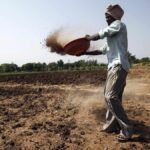

India’s agriculture faces a serious paradox: a large amount of biomass that could improve soil health is instead being burned. Punjab and Haryana alone burn more than 20 million tonnes of paddy straw in their open fields every year. This threatens soil health, food security, and causes severe air pollution in the region.
At the same time, large tracts of agricultural land suffer from very low soil organic carbon, poor water-holding capacity, and rapid loss of nutrients. Both these problems are symptoms of the same failure to recycle natural resources efficiently.
This is where biochar emerges as a carbon-negative solution.
What is Biochar?
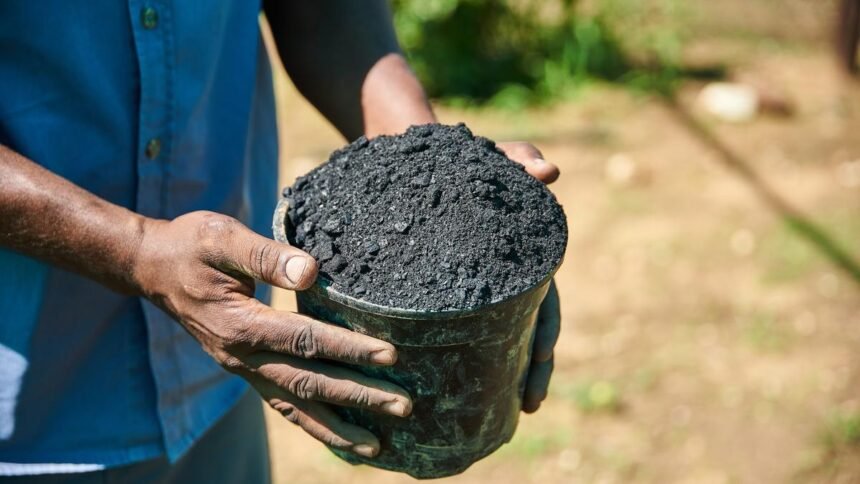
Biochar is a carbon-rich, porous soil amendment produced when agricultural biomass is heated in a low-oxygen environment—a process called pyrolysis. Unlike open burning, which releases stored carbon as CO₂, pyrolysis converts biomass into a stable charcoal-like material that persists in soil for hundreds to thousands of years.
The result is simple: waste is eliminated without pollution, and the soil gains a permanent carbon reservoir. Farmers often describe it as ‘black gold’.
Benefits Beyond Carbon Capture
Biochar is highly porous and contributes to aggregating soil particles, holding water and creating a suitable environment for microorganisms. Studies have indicated that it can improve crop productivity by 10% to 30% and water-holding capacity by 10% to 25%, particularly in soils low in nutrients.
Research from Kerala has shown that biochar made from coconut leaf stalks increased soil quality in different cropping systems. Perhaps most significantly, long-term studies have shown that biochar has the benefit of enhancing soil health and maintaining higher crop output over time.
By increasing the water-holding capacity and the ability to use nutrients efficiently, biochar can help crops withstand moisture stress while reducing dependency on external inputs. This is particularly important for small and marginal farmers who are often the most exposed to the climate’s vagaries.
Practical Solutions for Farmers
Several low-cost, accessible technologies are emerging to help farmers produce biochar at the farm gate.
Tractor-mounted machines like those developed by Takachar can process up to one metric tonne of stubble per hour. Today, farmers in Punjab and Haryana collectively use around 3,000 tonnes of biochar each year, significantly reducing the need to burn crop waste. As a result, stubble burning in Punjab has dropped by nearly 90 percent in a single season.
Low-tech kilns offer an even more affordable alternative. Simple kilns, often fabricated from modified metal drums, have been developed by institutes like MGIRI in Wardha. These tools can cost as little as ₹5,000–₹7,000 for individual farmers. Methods like the “Kon-Tiki” or similar pit/drum kilns use a “flame-curtain” principle that makes the process nearly smokeless.
The Central Research Institute for Dryland Agriculture (CRIDA) has developed portable kilns designed specifically for converting difficult residues like pigeonpea and cotton stalks into biochar efficiently.
Creating New Income Streams
Beyond improving soil health, biochar offers farmers a way to monetise their agricultural waste. The government could package the activities of turning agricultural waste into biochar and putting it on soil into carbon credit markets, creating a strong economic incentive for mass adoption.
Biochar carbon already passes rigorous stability criteria for long-term sequestration, and it can be classified as a persistent carbon dioxide removal technology under internationally accepted accounting standards. Each tonne of certified biochar can generate 2-2.8 t carbon dioxide-equivalent in carbon credits. Depending on carbon market prices, certified biochar can thus provide an additional source of income for project developers, farmers, and cooperatives.
Several companies are already helping Indian farmers monitor the extent of carbon storing their soil is doing and convert that into carbon credits, which are then sold in international voluntary carbon markets.
The Road Ahead
Integrating biochar into the existing initiatives on natural farming, soil health management, and carbon farming can deliver environmental and economic benefits at scale. In India, biochar remains largely confined to research trials and pilot projects, and is very much alien to many farmers.
However, agricultural residues are an important resource that can generate additional income, create jobs, and deliver environmental benefits. By systematically implementing these measures, India can turn its large waste streams into ‘black gold’, thus ensuring a more resilient agricultural future while making a meaningful contribution to global climate mitigation efforts.
The value of biomass can only be realised through an integrated ecosystem that catalyses innovation, entrepreneurship, market linkages, investment, and cost-effective access to biochar for farmers.