
The Securing Agriculture’s Workforce Act of 2026 aims to modernize the guest worker program, drawing support from major agricultural organizations while facing criticism from labor unions
On Tuesday, Rep. Glenn “GT” Thompson, R-Pa., introduced the Securing Agriculture’s Workforce Act of 2026 (H.R. 9535), garnering praise from some of the nation’s top farmer and farmworker groups and criticism from others.
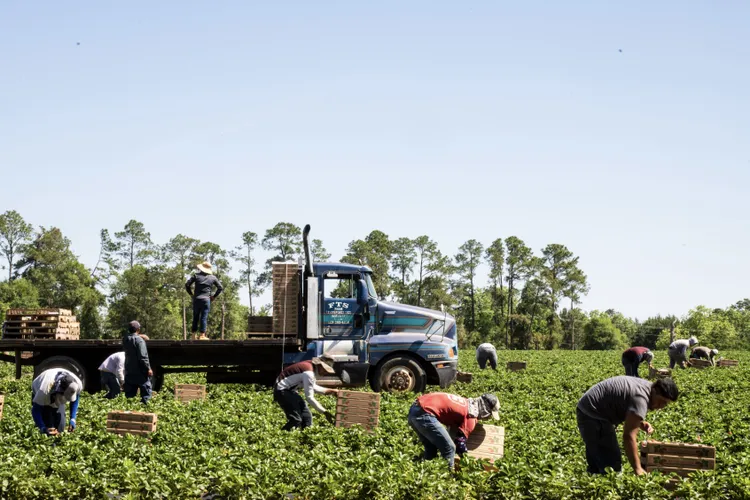
According to a press release from Thompson, the legislation would improve the accessibility and cost of ag labor through the H-2A program.
“It’s time to bring the H-2A program into the 21st century,” Thompson said in the press release. “Producers have been sounding the alarm for years that Congress needs to address the workforce crisis we have on our hands in farm country. The H-2A visa program is woefully outdated, and it no longer meets the needs of American agricultural production.”
Key Provisions of the Bill
According to a bill summary document, the Securing Agriculture’s Workforce Act would expand access to H-2A by:
- Stipulating that H-2A visas are for performing agricultural labor or services of a temporary nature only, removing the requirement that it also be seasonal
- Clarifying that “temporary” is in relation to the length of the job contract (a maximum of 350 days), rather than the underlying nature of the work being performed
- Transferring the authority to define “agriculture labor and services” to the Secretary of Agriculture, rather than Secretary of Labor
- Ensuring that a suite of additional activities, such as controlled environment agriculture, forestry, aquaculture, and the “harvest” of livestock, would be eligible for the program
- Limiting disruptions to the food supply by providing an opportunity for existing unauthorized agricultural workers to gain access to the program if they are otherwise eligible and can meet the requirements (which include background checks and an in-person interview)
Supportive Reactions
American Farm Bureau Federation: “The lack of available labor is among the largest limiting factors of American agriculture,” said Zippy Duvall, AFBF president. “We are grateful to Chairman GT Thompson for listening to America’s farmers.”
National Milk Producers Federation: “The Securing Agriculture’s Workforce Act represents the most significant reform to the ag workforce we’ve seen in decades,” said Gregg Doud, NMPF president and CEO. “This bill finally grants dairy access to H-2A by removing the seasonal requirements.”
National Pork Producers Council: “Agriculture needs a strong — and reliable — workforce. For pork producers, one giant step in the right direction means expanding the H-2A visa program to include year-round agricultural industries like ours,” said Rob Brenneman, NPPC president.
Western Growers: “Fresh produce growers have relied on the H-2A program out of necessity, but the program has not kept pace with the realities of modern agriculture,” said Dave Puglia, Western Growers president and CEO.
Concerned Reactions
National Farmers Union: “NFU has concerns about the provision extending H-2A access to meatpackers, a change that could undermine the program’s original intent and harm the farmers and workers it was designed to serve,” said Rob Larew, NFU president.
United Farm Workers: “This twisted piece of legislation would have long-term impacts on America’s rural communities, displacing longtime resident farmworkers who raise families and pay taxes with a huge underclass of foreign guest workers,” said Teresa Romero, UFW president.
United Food and Commercial Workers International Union: “The Securing Agriculture’s Workforce Act will turn these stable, permanent jobs into temporary ones, leaving workers with less money to take home and spend in their local economies,” said Milton Jones, UFCW International president.