
By using this site, you agree to the Privacy Policy and Terms of Use.
Accept
ruralconnectnews.comruralconnectnews.comruralconnectnews.com
  • Global Agriculture
  • India Region
  • Farming Industry
  • Agriculture Industry
  • Machinery & Technology
  • Dairy Industry
  • Podcast
  • Advertise
Reading: Agri-drones are now mainstream farm input in India: Garuda Aerospace founder
Share
Notification Show More
Font ResizerAa
Font ResizerAa
ruralconnectnews.comruralconnectnews.com
  • Global Agriculture
  • India Region
  • Farming Industry
  • Agriculture Industry
  • Machinery & Technology
  • Dairy Industry
  • Podcast
  • Advertise
  • Global Agriculture
  • India Region
  • Farming Industry
  • Agriculture Industry
  • Machinery & Technology
  • Dairy Industry
  • Podcast
  • Advertise
Follow US
  • Advertise
© 2026 ruralconnectnews.com Managed By Bolsterflip Media. All Rights Reserved.
ruralconnectnews.com > Blog > Machinery & Technology > Agri-drones are now mainstream farm input in India: Garuda Aerospace founder
Machinery & Technology

Agri-drones are now mainstream farm input in India: Garuda Aerospace founder

Rural Connect News
Last updated: 17/05/2026 6:58 PM
Rural Connect News 2 weeks ago
Share
SHARE

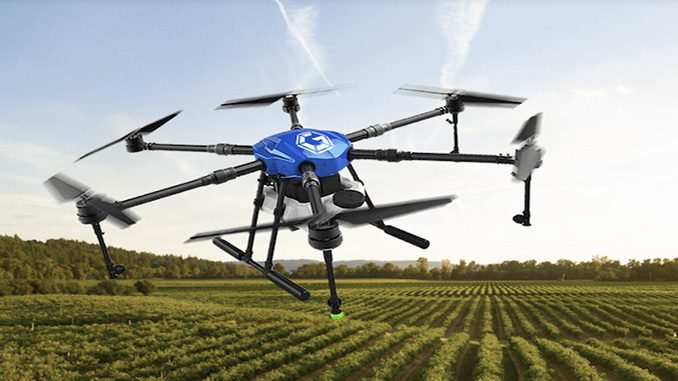
Agri-drones are no longer pilot projects – they have become a mainstream farm input across India, according to Agnishwar Jayaprakash, founder of Garuda Aerospace.

Contents
Which crops are seeing highest adoptionKey ROI driversThe future: Agri-Drone 3.0The bigger picture

In an interview with AgTechNews, Jayaprakash explained that the shift happened due to three key factors: labour shortages, government subsidies, and farmers accepting drones as a reliable spraying service.

Which crops are seeing highest adoption

Adoption is highest in paddy, cotton, sugarcane, banana and grapes. These are crops that require regular spraying and where labour availability has become a serious constraint.

Service-model drones dominate the market, allowing small farmers to access precision spraying without owning the hardware themselves. This has been crucial for adoption among marginal and small landholders who cannot afford to purchase drones outright.

Key ROI drivers

Jayaprakash highlighted several return-on-investment benefits that are driving farmer interest:

  • 60–70% labour savings – A major advantage in a country where farm labour is increasingly scarce and expensive
  • 90% less water – Critical for water-stressed regions
  • 20–30% chemical reduction – Drones spray more precisely, reducing input costs
  • Timely spraying – Drones can operate when manual spraying is difficult or impossible, protecting yield

The future: Agri-Drone 3.0

Looking ahead, Jayaprakash described what he calls “Agri-Drone 3.0” – the next phase of agricultural drone technology. This will include:

  • Autonomous operations requiring minimal human intervention
  • Variable-rate spraying that adjusts chemical application based on real-time crop needs
  • Swarm missions where multiple drones work together
  • Integration with insurance and advisory systems, creating a complete farm management ecosystem

The bigger picture

India has historically lagged in farm mechanization compared to countries like China and the US. But drones represent a leapfrog moment – skipping over expensive, large-scale machinery to offer precision, affordable aerial solutions.

Government subsidies under schemes like the Sub-Mission on Agricultural Mechanization (SMAM) have helped. But the real driver, Jayaprakash suggests, is farmer pragmatism. When a technology saves 70% on labour and 30% on chemicals – and works on small farms – adoption happens naturally.

As Agri-Drone 3.0 rolls out in the coming years, India’s fields may look very different. But for now, drones have already crossed the line from novelty to necessity.

You Might Also Like

India’s foodgrain production up 5% in 2025-26 crop year

Field to Film Festival Amplifies Indigenous and Rural Youth Voices

Union Cabinet raises sugarcane FRP by ₹10 per quintal

Japan’s Agriculture Minister resigns after his remark about not buying rice causes political fallout

“Machines are standing still”: Fuel shortages disrupt wheat harvest in Uttar Pradesh

Share This Article
Facebook Twitter Email Print
Previous Article Industry flags concerns on draft Pesticides Management Bill
Next Article Oxford Spinout Wild Bioscience Raises $60M Series A to Advance Global Crop Resilience

About us

Rural Connect News is a dedicated digital news platform committed to amplifying the voice of rural India and connecting Bharat’s heartland with the global stage. We deliver the latest rural news, agriculture updates, development stories, and innovation-led insights that shape the future of villages and farming communities..

Quick Link

  • About us
  • Advertise
  • Disclaimer
  • Privacy Policy
  • Terms and Conditions

Find Us on Socials

© 2026 ruralconnectnews.com Managed By Bolsterflip Media. All Rights Reserved.
Welcome Back!

Sign in to your account

Lost your password?
