
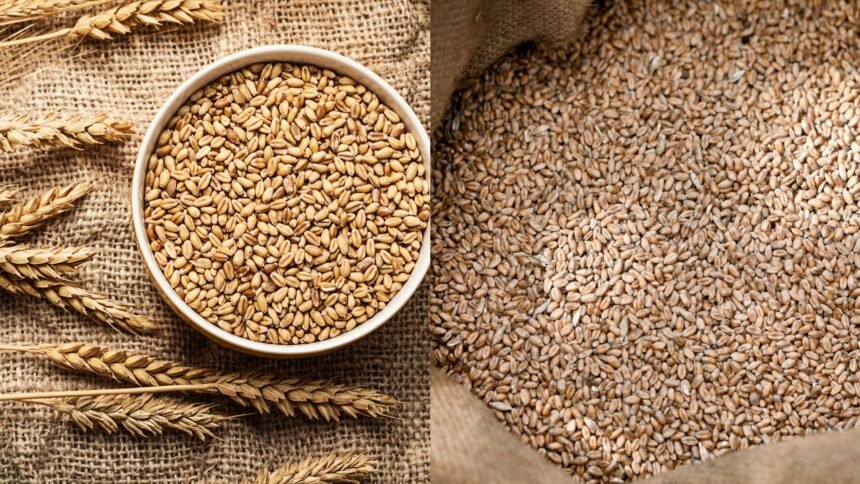
The Centre has approved the export of an additional 25 lakh metric tonnes (LMT) of wheat, aiming to support farmers’ incomes while maintaining stability in domestic markets. The decision, taken after a comprehensive review of production, stock availability, and price trends, is expected to improve market liquidity and ensure efficient stock management during the peak arrival season.
The Ministry of Consumer Affairs, Food & Public Distribution said the move would help prevent distress sales and contribute to stable domestic prices without compromising food security.
The Numbers – Production and Acreage
According to estimates by the Department of Agriculture and Farmers Welfare , wheat production for the 2025-26 crop year is projected at 1,202 LMT – a strong outlook supported by increased acreage.
| Metric | 2025-26 | Previous Year | Change |
|---|---|---|---|
| Wheat production (projected) | 1,202 LMT | — | — |
| Acreage | 334.17 lakh hectares | 328.04 lakh hectares | +6.13 lakh hectares |
The government attributed the rise in cultivation to:
- Favourable conditions
- Assured Minimum Support Price (MSP)
- Robust procurement mechanisms
These factors have boosted farmer confidence , leading to increased planting.
Total Permitted Exports – 50 LMT Wheat + 10 LMT Products
With the latest approval, total permitted exports now stand at:
| Category | Permitted Volume |
|---|---|
| Wheat | 50 LMT |
| Wheat products | 10 LMT |
Export Approval Timeline (2026)
| Date | Approval |
|---|---|
| January 2026 | 5 LMT of wheat products |
| February 2026 | 5 LMT of wheat products + 25 LMT of wheat |
| April 2026 | Additional 25 LMT of wheat |
| Total | 50 LMT wheat + 10 LMT products |
Why This Decision – Objectives and Rationale
The Ministry outlined several objectives behind the additional export approval:
| Objective | Explanation |
|---|---|
| Support farmers’ incomes | Ensure remunerative prices for growers |
| Prevent distress sales | Avoid forced selling at lower-than-MSP rates |
| Improve market liquidity | Facilitate smoother trade |
| Efficient stock management | Manage buffer stocks during peak arrival |
| Stabilise domestic prices | Balance supply and demand |
| Safeguard food security | Maintain sufficient reserves |
The decision was taken after a comprehensive review of production, stock availability, and price trends.
Impact on Farmers – Preventing Distress Sales
The peak arrival season is when farmers bring their harvested wheat to mandis (markets). Without sufficient demand, prices can fall below MSP, forcing distress sales .
| Without Export Approval | With Export Approval |
|---|---|
| Excess supply in domestic market | Additional demand from exports |
| Prices may fall below MSP | Prices supported by export demand |
| Farmers forced to sell at lower prices | Farmers get better prices |
| Middlemen benefit | Farmers benefit directly |
The move will help prevent distress sales and contribute to stable domestic prices.
Impact on Domestic Prices – Stability, Not Surge
The government has emphasized that the export approval is calibrated to avoid domestic price spikes. Key safeguards:
| Safeguard | Purpose |
|---|---|
| Production assessment | 1,202 LMT projected – ample supply |
| Stock review | Buffer stocks sufficient |
| Phased approvals | Gradual release, not sudden |
| Food security priority | Domestic needs first |
The Ministry said the government remains committed to adopting calibrated and timely measures to balance the interests of farmers and consumers.
The MSP Factor – Farmer Confidence
The government credited assured MSP and robust procurement mechanisms for the increase in wheat acreage.
Wheat MSP (2026-27)
| Detail | Amount |
|---|---|
| MSP per quintal | Rs 2,585 |
MSP provides a safety net : even if market prices fall, the government buys at the announced price. Export approvals complement MSP by creating additional demand, potentially pushing market prices above MSP.
Food Security – Not Compromised
The government has been careful to emphasize that food security remains fully safeguarded.
| Food Security Measure | Status |
|---|---|
| Buffer stock norms | Being maintained |
| PDS requirements | Fully met |
| Strategic reserves | Untouched |
| Domestic consumption | Prioritized |
The export approval is based on a surplus after meeting domestic requirements.
International Context – India as a Wheat Exporter
India is not traditionally a major wheat exporter (unlike Russia, Ukraine, or Australia). However, occasional surpluses allow for exports.
India’s Wheat Export History
| Year | Export Volume | Notes |
|---|---|---|
| 2022 | ~7 LMT (limited) | Export ban imposed after heatwave |
| 2023-24 | Minimal | Ban continued |
| 2025-26 | 50 LMT (permitted) | Significant relaxation |
The current export approvals signal a policy shift toward allowing more wheat to leave the country, benefiting farmers but requiring careful management.
Opposition and Criticism – Potential Concerns
While the decision is farmer-friendly, some critics may raise concerns:
| Concern | Government Response |
|---|---|
| Domestic price rise | Production ample; calibrated approvals |
| Buffer stock depletion | Stocks reviewed before decision |
| Benefit to traders, not farmers | MSP and export demand both support farmers |
| Timing | Peak arrival season – when farmers need markets most |
The Ministry has framed the decision as a balanced approach : supporting farmers without harming consumers.
A Calibrated Step for Farmer Welfare
The government’s approval of an additional 25 LMT of wheat exports – bringing total permitted exports to 50 LMT of wheat and 10 LMT of wheat products – is a calibrated move to support farmers during the peak arrival season.
With wheat production projected at a robust 1,202 LMT and acreage up to 334.17 lakh hectares, India has surplus grain available. The export approval aims to:
- Prevent distress sales
- Stabilise domestic prices
- Strengthen farmers’ incomes
- Maintain food security
As the Ministry stated: “The government remains committed to adopting calibrated and timely measures to balance the interests of farmers and consumers.”
For Indian wheat farmers, this decision means additional market access and potentially better prices. For consumers, the government has assured that domestic supplies and prices will remain stable.
The challenge now is execution: ensuring that export approvals translate into actual shipments and that farmers see the benefits at the mandi gate.