
From dealer agreements to inventory setup, here’s your step-by-step roadmap
Starting a farm equipment dealership – often called a “farming instrument shop” – is a capital-intensive but potentially rewarding business. Unlike a general retail store, farm equipment dealers typically operate under franchise-like agreements with major manufacturers. Here is everything you need to know.
Step 1: Understand the Dealership Model
Most farm equipment shops in the USA are not independent retailers. They are authorized dealers for major manufacturers like John Deere, Case IH, New Holland Agriculture, or Kubota .
Under these agreements, the manufacturer assigns you a geographically defined area of primary responsibility for sales and service . The manufacturer sets requirements for:
- Facility location and appearance
- Inventory levels of new equipment and parts
- Personnel training
- Working capital and debt-to-net-worth ratios
- Monthly and annual financial reporting
What this means: You cannot simply open a shop and start selling any brand. You must apply to and be approved by a manufacturer.
Step 2: Assess the Financial Requirements
The capital requirements for a farm equipment dealership are substantial. According to industry sources, John Deere states that minimum equity requirements for a dealer start at $3 million and can go as high as $30 million depending on the type of equipment sold .
Initial startup costs can include:
| Expense Category | Estimated Range |
|---|---|
| Business formation (LLC, licenses) | $50 – $500 |
| Permit and license fees | $50 – $700 |
| Small business insurance | $500 – $2,000 annually |
| Initial inventory (parts and small equipment) | $300 – $5,000+ |
| Facility lease or purchase | Varies widely by location ($1,000 – $80,000+/month) |
| Vehicle costs (service trucks) | $0 – $10,000+ |
| Website and domain | $12 – $200 |
| Advertising and signage | $75 – $2,500 |
Note: These represent smaller operational costs. The major capital requirement – equipment inventory and facility – can run into millions.
Step 3: Apply to Become an Authorized Dealer
The application process generally follows these steps:
1. Research manufacturers. Visit the websites of major farm equipment manufacturers. John Deere and New Holland have dealer inquiry applications available online . The Farm Equipment Manufacturers Association (farmequip.org) maintains a list of member companies .
2. Request a dealer package. Manufacturers will provide information about their dealership requirements, including financial thresholds, territory availability, and facility standards .
3. Prepare your application. Required documentation typically includes:
- Financial statements demonstrating net worth and liquidity
- Proof of business experience (retail management, farming background, or equipment sales)
- Business and personal references
- A letter of credit
- A comprehensive business plan
- Market information for your proposed territory
4. Complete the review process. Manufacturers may request in-person meetings, background checks, and additional financial documentation .
5. Have a contract lawyer review the agreement. Dealer agreements are complex legal documents with significant obligations. Never sign without professional legal review.
6. Complete required training. Most manufacturers provide training programs for new dealers covering sales, parts management, and service operations .
Step 4: Secure Financing
Given the high capital requirements, financing is a critical step. Options include:
- Equipment financing companies – Specialize in agricultural and construction equipment
- SBA loans – The U.S. Small Business Administration offers loan programs for small businesses
- Manufacturer financing – Some manufacturers provide financing assistance to qualified dealers
- Banks and credit unions – Traditional commercial loans, often requiring substantial collateral
- Investors or partners – Bringing in equity partners can help meet manufacturer net worth requirements
Step 5: Obtain Required Licenses and Permits
General business licenses:
- Register your business entity (LLC, corporation, or partnership) with your state
- Obtain an Employer Identification Number (EIN) from the IRS
- Register for state and local taxes
Dealer-specific licenses:
- Farm equipment dealers may need special dealer licenses at the state level. For example:
Agricultural dealer bonds: Some states require agricultural dealers to post a surety bond. In Florida, for example, agricultural product dealers must file a bond of at least $5,000, with license fees up to $500 . (Note: This typically applies to dealers in agricultural commodities rather than equipment – check your state’s specific requirements.)
Check with your state Department of Agriculture and local business licensing office for complete requirements.
Step 6: Set Up Your Operations
Facility requirements:
- Manufacturers typically require specific facility standards regarding location, appearance, size, and signage
- You may need separate areas for equipment display, parts storage, service bays, and customer reception
Inventory management:
- You must maintain “satisfactory levels of new equipment and parts inventories”
- Service vehicles, diagnostic equipment, and specialty tools are required
Staffing:
- Sales personnel must be trained on manufacturer products
- Service technicians need manufacturer certification
- Parts specialists must understand inventory systems
Step 7: Understand Ongoing Obligations
Once approved, your dealership will have continuing responsibilities:
Annual business planning: You must submit and secure manufacturer approval of a comprehensive business plan covering equipment sales objectives, parts inventory, training plans, advertising budgets, and facility upgrades .
Regular reviews: Manufacturers conduct semi-annual and monthly reviews of sales performance, market share, inventory status, and operational metrics .
Market share requirements: Your dealer agreement will specify market share targets you must achieve. If performance is deficient, the manufacturer may require corrective action or potentially terminate the agreement .
Annual license renewal: State dealer licenses typically require annual renewal with associated fees .
Step 8: Alternative Paths – Independent Dealerships and Distributors
If becoming an authorized dealer for a major manufacturer is not feasible, consider these alternatives:
Used equipment dealerships: You can operate a dealership selling used farm equipment without a manufacturer franchise agreement.
Equipment distributor: Companies like Implement Sales operate as distributors, carrying multiple brands and supplying equipment to dealers across multiple states. Implement Sales grew from $6.5 million to over $20 million annually between 2019 and 2023 .
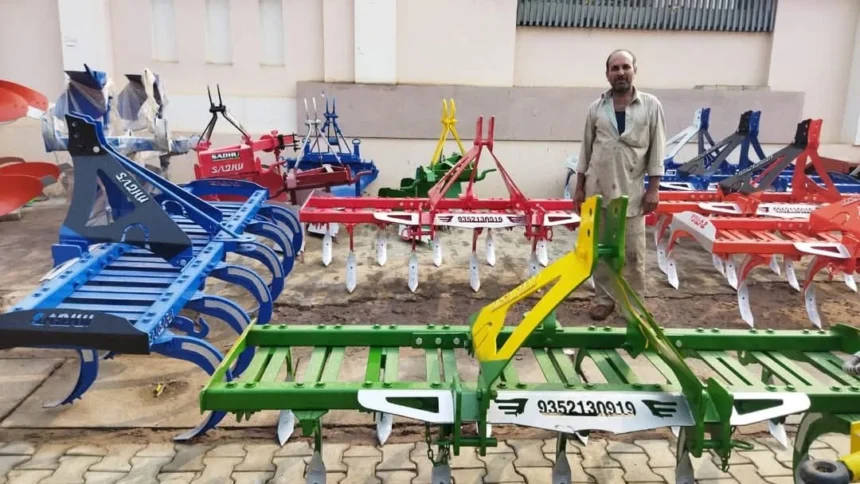
Specialty attachment dealer: Focus on implements and attachments (mowers, tillers, grapples, etc.) rather than tractors. These often have lower capital requirements.
Parts and service only: Some businesses operate as independent service and parts providers without selling new equipment.
Step 8: Resources for New Dealers
- U.S. Small Business Administration (SBA) : Business plan assistance and loan programs
- Farm Equipment Manufacturers Association (farmequip.org) : Directory of manufacturers
- State Department of Agriculture : License and bond requirements
- Local SCORE chapter : Free business mentoring from retired executives
- Industry publications : Farm Equipment magazine (farm-equipment.com) for dealer news and best practices
Final Advice
Starting a farm equipment dealership is not a small business venture – it is a major capital investment that requires manufacturer approval, substantial financial resources, and ongoing commitment to performance standards.
Key takeaways:
- Minimum equity requirements typically start at $3 million
- You must be approved by a manufacturer – you cannot simply open independently
- Dealer agreements are legally complex – hire a lawyer
- The business has ongoing performance obligations and market share requirements
- Consider alternative paths like used equipment, parts/service, or distribution if manufacturer approval is not feasible
If you have experience in farming, equipment sales, or retail management, and the financial resources to meet manufacturer requirements, a farm equipment dealership can be a profitable long-term business serving an essential industry.