
Japan’s Agriculture, Forestry and Fisheries Minister Taro Yamada resigned on Wednesday, just 48 hours after a casual remark about not buying rice triggered a political firestorm and widespread farmer anger.
Yamada, a first-time minister appointed in the recent cabinet reshuffle, submitted his resignation to Prime Minister Fumio Kishida, who accepted it with immediate effect.
What did the minister say?
The controversy began on Monday during a press conference about rice price supports. A reporter asked Yamada about the impact of rising rice prices on household budgets.
Yamada replied: “To be honest, I don’t buy rice myself. My wife handles all grocery shopping. So I cannot speak to retail prices directly.”
The remark, intended as an offhand admission of his domestic life, was perceived as deeply insensitive coming from the nation’s top agriculture official.
Why the remark caused outrage
Japan’s rice farmers have been struggling with declining consumption, aging farming population, and stagnant prices. The government has spent billions of yen on subsidies and production controls to protect the industry.
For the Agriculture Minister to admit he has no personal connection to the nation’s staple food – and that his household does not even purchase rice – was seen as a betrayal.
“This is like the Finance Minister saying he doesn’t pay taxes,” said one opposition MP during a parliamentary session.
Within hours, #YamadaResign trended on Japanese Twitter, with over 500,000 posts. Farmer cooperatives in Niigata, Akita, and Hokkaido issued statements demanding his removal.
Political fallout
The opposition Constitutional Democratic Party of Japan submitted a no-confidence motion against Yamada on Tuesday, arguing that he had lost the moral authority to lead the ministry.
Prime Minister Kishida initially defended Yamada, calling it an “unfortunate choice of words” but not a resigning matter. However, by Wednesday morning, declining approval ratings and pressure from within his own Liberal Democratic Party forced Kishida to change course.
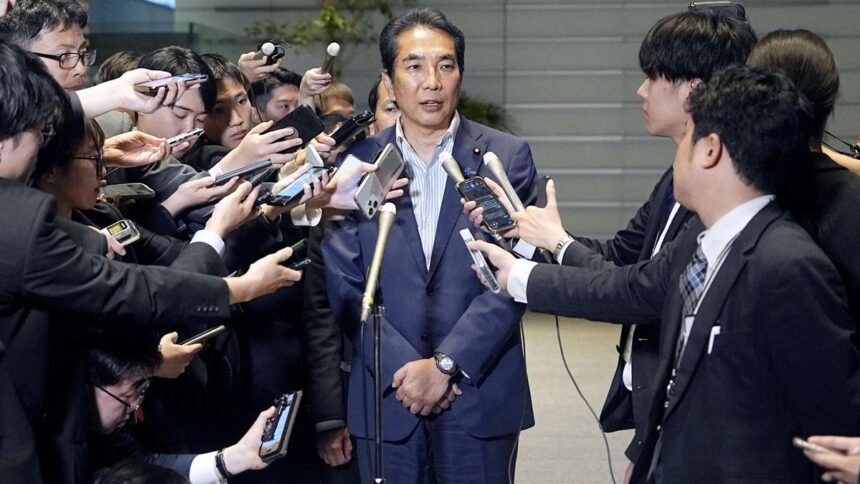
“The minister’s remark caused deep hurt to our farmers. I have accepted his resignation,” Kishida told reporters at the Prime Minister’s Office.
Yamada’s apology
In his resignation press conference, a visibly contrite Yamada bowed deeply and apologized.
“I spoke carelessly and without understanding the feelings of hardworking rice farmers across Japan. My words were inexcusable. I deeply regret the pain I have caused,” he said.
When asked if he has ever eaten rice at home, Yamada clarified: “Of course I eat rice. My wife cooks it. I simply do not purchase it personally. That distinction, however, does not matter. As minister, I should have understood the retail realities.”
The broader context
The resignation highlights the extreme sensitivity of Japan’s rice politics. Rice is not just a crop in Japan; it is culturally sacred and politically explosive.
The country maintains near 100% self-sufficiency in rice through high tariffs on imported rice (up to 778%). The government also controls production through a ‘rice acreage reduction’ policy that pays farmers not to grow rice to maintain prices.
Farmers have been protesting for months over rising fertiliser costs and falling consumption. Yamada’s remark poured fuel on an already burning fire.
Who replaces Yamada?
Prime Minister Kishida has appointed former agriculture minister Shigeru Ishiba to temporarily take over the portfolio. Ishiba, a veteran politician from a rural constituency, is known for his close ties to farming communities.
“I understand the pain of our farmers because I represent them. I will work to rebuild trust,” Ishiba said after accepting the additional charge.
What this means for Kishida
The resignation is a blow to Kishida’s already weakened cabinet. His approval ratings have hovered around 30% due to economic stagnation and a series of minor scandals.
Opposition parties have demanded a parliamentary investigation into whether Yamada was pressured to resign to protect Kishida. The Prime Minister’s office has denied any interference.
For now, Japan’s rice farmers have won a scalp. But the deeper issues – falling rice consumption, aging farmers, and subsidy burdens – remain unaddressed.