

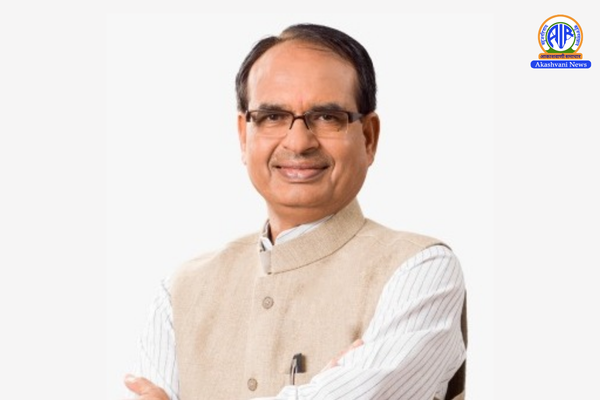
Union Agriculture Minister Shivraj Singh Chouhan on Thursday asserted that India has presented a new model of agriculture to the world, one that has achieved record foodgrain production while reducing the use of chemical fertilisers.
Speaking at a conference on ‘Sustainable Agriculture for Global Food Security’ in New Delhi, Chouhan highlighted India’s achievement of 121.87 million tonnes of wheat production in the 2025-26 crop year, even as the government promoted natural farming and balanced fertiliser use.
What Chouhan said
“Today, the world is looking at India. We have presented a new model of agriculture – one that increases production, protects the environment, and ensures farmers’ incomes. This is not easy. But India has shown it is possible,” Chouhan said.
He pointed out that India is not just feeding its own population of 1.4 billion but also contributing to global food security through exports of rice, wheat, and other commodities.
“When other countries banned food exports during the global crisis, India stepped up. We exported to countries in need. That is our responsibility as a global leader,” he added.
Record wheat production
The Agriculture Ministry’s third advance estimate for 2025-26 placed wheat production at 121.87 million tonnes – a slight increase from the previous year’s 121.06 million tonnes. This marks the sixth consecutive year of record wheat production.
Total foodgrain production for 2025-26 is estimated at 335.76 million tonnes, marginally higher than the previous year’s 335.53 million tonnes.
Chouhan attributed this consistent performance to improved seed varieties, better irrigation coverage, and farmer awareness programmes.
Balancing production with sustainability
The Minister emphasized that increased production has not come at the cost of environmental degradation. He cited the PM-PRANAM scheme, under which 14 states have reduced chemical fertiliser consumption by 15.14 lakh metric tonnes in 2023-24.
“We are moving towards balanced fertilisation. Soil health cards have been distributed to over 25 crore farmers. Nano urea and nano DAP are being promoted. The results are visible,” he said.
He also noted that the area under natural farming has expanded to over 12 lakh hectares, with 8 lakh farmers adopting zero-budget techniques.
India’s global role
Chouhan argued that India’s agricultural model is particularly relevant for developing countries in Africa and Asia, which face similar challenges of small landholdings, climate vulnerability, and food security concerns.
“We are not copying the Western model of large farms and heavy subsidies. We are creating our own path – technology-driven but farmer-centric, productive but sustainable,” he said.
He announced that India will host a global conference on ‘Agroecology and Food Security’ in December 2026, inviting agriculture ministers from 50 countries.
Criticism and challenges
Despite Chouhan’s optimism, challenges remain. Farmer incomes have stagnated in several states. The average monthly income of an agricultural household is still below ₹7,000, according to official data.
Opposition leaders have questioned the government’s claim of a “new model,” pointing to falling prices of vegetables and pulses that have hurt farmers.
Congress leader Jairam Ramesh said, “Record production is meaningless if farmers are not getting remunerative prices. The government’s new model has not solved the basic problem of price volatility.”
What happens next
The government is now focusing on expanding the PM-AASHA scheme to ensure better price support for farmers. A new portal for direct procurement of pulses and oilseeds will be launched next month.
Chouhan also announced that the Agriculture Ministry will soon release a ‘National Farmer Happiness Index’ – a first-of-its-kind metric measuring not just production but also farmer well-being, income stability, and access to markets.