

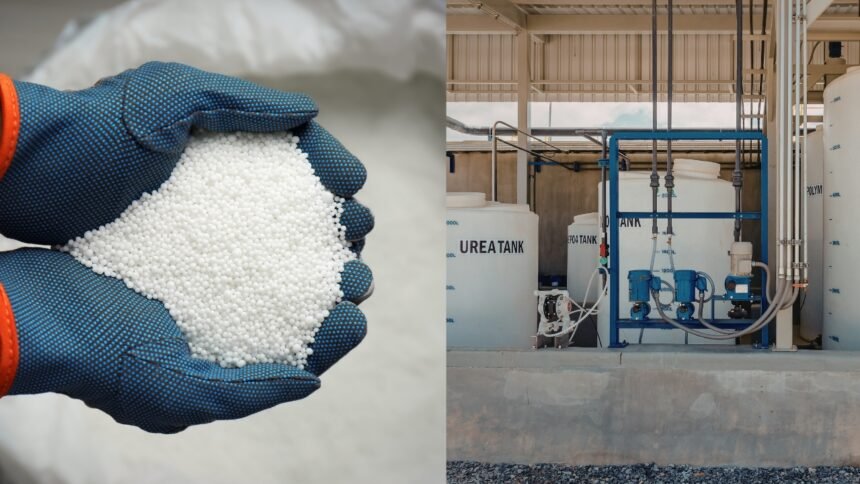
India is expected to produce approximately 2 million tonnes of urea in April 2026, marking an 11.1 percent increase from 1.8 million tonnes produced in March 2026. The sharp rise is attributed to improved availability of liquefied natural gas (LNG), which had been disrupted due to the ongoing West Asia crisis.
According to official sources, this production level would be close to the usual April production of 2.18 million tonnes. The increase in domestic output comes at a critical time, just ahead of the peak kharif demand season that begins in June.
Why Did Production Drop in March?
India typically produces between 2 and 2.5 million tonnes of urea per month domestically. However, March 2026 saw a dramatic 27 percent drop to just 1.8 million tonnes.
The decline occurred because urea manufacturing units went for premature routine shutdowns due to low gas supplies. The West Asia crisis, particularly tensions in the Strait of Hormuz region, had constrained LNG availability, forcing production cuts across the fertiliser sector.
LNG Supplies Recover Sharply
Since April 6, 2026, actual LNG supplies to urea units have risen to almost 90 percent of their average consumption of the past six months. This is a significant improvement from the earlier 60 percent supply level.
| Metric | March 2026 | April 2026 (Est.) | Change |
|---|---|---|---|
| Domestic Urea Production | 1.8 million tonnes | 2.0 million tonnes | +11.1% |
| LNG Supply Level | ~60% of normal | ~90% of normal | +30% |
| Imported Urea Expected | — | ~0.6 million tonnes | — |
The recovery in LNG supplies has been made possible through aggressive spot buying by the Indian government. India has purchased LNG from spot markets three times since the West Asia crisis began, at prices ranging from $19-21 per million metric British Thermal Units (mmBtu) , compared to pre-war levels of $10-12 per mmBtu.
The average consumption of urea units has been 52 million metric standard cubic meters per day (mmscmd) over the last six months.
Imported Urea to Supplement Domestic Output
In addition to the rise in domestic production, approximately 0.6 million tonnes of imported urea is expected to arrive soon, further boosting total availability ahead of the kharif planting season.
However, import prices have skyrocketed due to global supply disruptions.
IPL Tender Receives Massive Response
Indian Potash Limited (IPL), the country’s largest fertiliser importer, issued a tender earlier this month to secure 2.5 million tonnes of urea – nearly a quarter of India’s annual imports of about 10 million tonnes in 2025.
The tender received bids totaling 5.6 million tonnes, indicating strong global interest despite high prices.
Soaring Import Prices
According to company sources, the lowest offers to supply urea were:
| Coast | Price (per tonne, cost-and-freight) |
|---|---|
| West Coast | $935 |
| East Coast | $959 |
These prices are nearly double the levels achieved just two months ago, before supplies were disrupted by the US-Israel conflict with Iran. For context, urea prices in early 2026 were hovering around $500 per tonne.
Fertiliser Stocks Comfortable Despite Crisis
Despite the supply chain challenges, India’s overall fertiliser stock position remains comfortable. As of April 15, 2026, total fertiliser stocks stood at 18.4 million tonnes, compared to 16 million tonnes during the same period last year.
| Date | Fertiliser Stock (million tonnes) |
|---|---|
| April 15, 2025 | 16.0 |
| April 15, 2026 | 18.4 |
This buffer provides some cushion against further disruptions, though officials remain cautious about the months ahead.
The West Asia Crisis and Its Impact on Urea
The recent surge in urea prices and supply uncertainty is directly linked to geopolitical tensions in West Asia. Key factors include:
Strait of Hormuz Disruption
Between one-quarter and one-third of global fertiliser trade – including up to one-third of nitrogen fertilisers (urea) – transits through the Strait of Hormuz. The Gulf region is also a major fertiliser producer.
Rising LNG Prices
Urea production is energy-intensive, relying heavily on natural gas. With LNG spot prices nearly doubling from pre-crisis levels, production costs have soared for both domestic and international manufacturers.
Global Supply Chain Ripple Effects
The crisis has disrupted shipping routes, increased insurance premiums, and created uncertainty about future supplies. This has prompted panic buying and price speculation across global markets.
What This Means for Indian Farmers
For Indian farmers, the situation presents a mixed picture:
Positive Developments
- Higher domestic production (2 million tonnes in April) ensures baseline availability
- Comfortable overall stocks (18.4 million tonnes) provide a buffer
- Government proactive buying through IPL tenders secures imports despite high prices
Ongoing Concerns
- Soaring import prices ($935-959 per tonne) will increase subsidy burden
- Potential for further disruptions if West Asia tensions escalate
- Higher fertiliser costs could eventually translate to higher crop input expenses
The government heavily subsidises urea to keep farmer prices affordable. However, a sustained increase in import prices would strain the fiscal deficit, potentially leading to difficult policy choices.
Looking Ahead – Kharif Season 2026
The kharif season (summer planting) typically begins in June, with sowing continuing through July and August. Urea demand peaks during this period, particularly for water-intensive crops like paddy (rice), sugarcane, and cotton.
With domestic production recovering and imports arriving, officials are confident that availability will not be a constraint. However, the cost of that availability remains a significant concern.
As one official source told Business Standard: “The government is committed to ensuring that farmers get urea at affordable prices. We are monitoring the situation daily and will take whatever steps are necessary.”
A Fragile Recovery
India’s 11 percent jump in domestic urea production for April 2026 is welcome news for the agriculture sector. The recovery in LNG supplies, achieved through aggressive spot purchases, has allowed production units to restart and ramp up output.
However, the underlying vulnerabilities remain. India imports a significant portion of its urea requirements, and global prices have nearly doubled in two months. The West Asia crisis shows no signs of rapid resolution, and any further escalation could disrupt supplies again.
For now, the government’s proactive approach – securing LNG from spot markets, issuing timely import tenders, and maintaining comfortable buffer stocks – appears to be working. But the situation remains fluid, and all eyes will be on the Strait of Hormuz in the coming weeks as the kharif season approaches.