

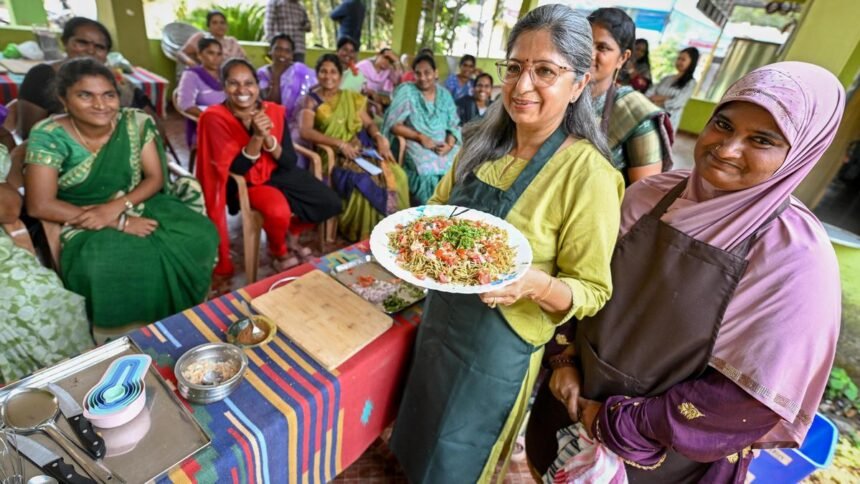
In the parched districts of Andhra Pradesh, a quiet revolution is underway – and it is being led by women.
The state government’s ambitious millet mission, launched three years ago, has transformed thousands of rural women from subsistence farmers into micro-entrepreneurs. From growing traditional millets to manufacturing and marketing value-added products, these women are now at the forefront of a nutri-cereal comeback.
From kitchen gardens to commercial production
In Anantapur, one of the state’s most drought-prone districts, women from Veligallu village started with small kitchen gardens. Today, they run a fully operational millet processing unit under their self-help group (SHG) – Sri Venkateswara Mahila Sangham.
“Earlier, we grew only groundnut and sunflower. The failure of rains meant failure of income,” says S. Lakshmidevi, 42, who leads the group. “Then the government gave us foxtail millet seeds and training. Now we make millet flour, dosa mix, and cookies. Our monthly income has doubled.”
The group’s products are now sold in urban centers through the state’s ‘Girijana Cooperative’ outlets and online platforms.
The policy behind the push
Andhra Pradesh’s Millet Mission, under the ‘Nadu-Nedu’ program, targets bringing 5 lakh acres under millet cultivation by 2027. The government provides subsidized seeds, technical support, and market linkages.
But the real game-changer has been the focus on women-led enterprises. Over 2,300 SHGs across the state have been trained in millet cultivation, processing, and packaging.
Each SHG receives a millet processing kit including a de-stoner, pulverizer, and packing machine – worth approximately ₹1.5 lakh – at 90% subsidy.
Value addition is the key
Women are not just growing millets; they are creating branded products under the collective label ‘Andhra Siridhanya’.
Products include:
- Millet noodles and pasta
- Ragi malt mixes
- Barnyard millet upma mix
- Little millet idli-dosa batter
- Millet-based cookies and snacks
These products target urban health-conscious consumers, diabetic patients, and the gluten-free market.
Breaking traditional barriers
For many women, this has been their first independent source of income. K. Ramanamma, 38, from Kurnool district, says: “Earlier, my husband controlled all finances. Now I have my own bank account and savings. I even bought a smartphone to take online orders.”
The mission has also partnered with banks to provide easy credit to SHGs. Over 800 groups have received loans totaling ₹12 crore under the ‘Millet Mahila Shakti’ scheme.
Health and climate benefits
Millets require 60% less water than paddy and can grow in poor soil. As Andhra faces recurring droughts, the shift makes ecological sense. Nutritionally, millets are rich in fiber, protein, and micronutrients – combating anemia and diabetes prevalent in rural areas.
Challenges remain
Despite success, challenges persist. Marketing beyond the state, competing with cheap rice and wheat, and maintaining quality standards are ongoing struggles. Women also need advanced training in branding and digital sales.
The road ahead
The state plans to set up 50 ‘Millet Haats’ – women-run retail outlets – across Andhra by December 2026. Meanwhile, the women of Veligallu have already started planning their next product: millet-based ready-to-eat meals for working professionals.
For thousands of women, the millet mission is not just about farming. It is about dignity, independence, and a future they control.