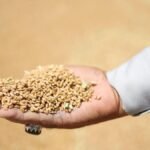


Parts of Maharashtra continue to witness unseasonal rainfall, compounding the distress of farmers who have already suffered significant crop losses over the past two months. With the Kharif season approaching, concerns are mounting over the financial strain on farmers and the delayed arrival of the monsoon.
The continued wet spell, coupled with forecasts of a below-normal monsoon, has deepened uncertainty for the state’s agricultural sector .
Widespread damage across the state
Unseasonal rains accompanied by hailstorms and strong winds have left a trail of damage across several districts over the past few weeks . Preliminary reports indicate that crops across 1.22 lakh hectares in 29 districts have been affected . The worst-hit districts include Pune, Nashik, Solapur, Ahilyanagar, Jalgaon, Kolhapur, Dhule, Buldhana, and Chhatrapati Sambhajinagar .
State Agriculture Minister Dattatray Bharne confirmed that the rabi season has been significantly impacted. “Unseasonal rain and hailstorms have affected rabi crops across 29 districts. The assessment process is still underway,” Bharne told reporters .
Horticulture hit hard
The horticulture sector has faced severe blows. Alphonso mango orchards in Ratnagiri, Sindhudurg, and Palghar have suffered premature fruit drop and increased risk of fungal diseases such as anthracnose. Mukund Joshi, secretary of the Hapus Amba Utpadak Vikreta Sahakari Sangh, estimated yield losses could range from 40 to 50 per cent .
Grape vineyards in Sangli have experienced berry splitting and rotting due to sudden rains, with losses estimated between 30 and 40 per cent. Cashew farmers in Ratnagiri have also been hit, with production losses potentially exceeding 40 per cent .
Banana plantations in Beed have been devastated, with fruit prices collapsing from Rs 15 per kg in late February to Rs 3-4 per kg currently due to a combination of rain damage and export disruptions from the West Asia conflict .
Field crops flattened
Standing and harvested rabi crops have suffered large-scale damage. Wheat, gram, jowar, and bajra ready for harvest have been flattened in several places . Onions, green chickpeas, chillies, and tomatoes have also been affected due to waterlogging .
Farmers report that wheat, jowar, and harbara (Bengal gram) crops that saw delayed sowing have been particularly impacted. Turmeric laid out for drying and onion seed crops in Washim have been severely affected .
Farmer protests and relief demands
In Baglan taluka of Nashik district, onion growers have protested alleged irregularities in crop-cutting experiments, claiming official yield assessments show unrealistic figures of “103 quintals from affected fields,” potentially jeopardizing insurance claims .
Farmer leaders have demanded immediate relief. Vijay Jawandhia, a farmer leader from Vidarbha, stressed the need for easy access to bank loans. “If farmers are denied crop loan, they will be driven to private money lenders. This will lead to greater financial stress,” he warned .
Swabhimani Shetkari Sanghatana president Raju Shetti demanded financial assistance for farmers who lost crops twice—during the 2025 Kharif and 2026 Rabi seasons. “The government should adopt a flexible policy. Otherwise majority of farmers will be financially wrecked,” he said .
Government response
Chief Minister Devendra Fadnavis has assured that the government will provide all necessary assistance to affected farmers. The state has already disbursed Rs 128.65 crore for losses incurred between October and December 2025, benefiting 1,80,574 farmers across 1,14,752 hectares .
For the unseasonal rains between January and April 2026, the state government has confirmed that damage assessments (panchnamas) are currently in progress. According to preliminary data, 1.94 lakh farmers have already faced losses across 1.22 lakh hectares during the April rains alone .
Revenue Minister Chandrashekhar Bawankule has assured that surveys to assess the exact extent of crop damage will be expedited .
Kharif season concerns
As the Kharif season approaches, farmers face a difficult sowing period. The sowing area for Kharif is projected at 152 lakh hectares, significantly larger than the rabi season’s 65 lakh hectares. This season is the mainstay for small and marginal farmers, who account for 78 per cent of the agriculture sector .
The state government has urged farmers not to rush sowing, as the monsoon onset is unlikely before June 10. The India Meteorological Department (IMD) has forecast a below-normal southwest monsoon at 90 per cent of the Long Period Average (LPA), with rainfall during June expected to remain below normal across most parts of the country .
Adding to the concerns, potential El Niño conditions could further impact Kharif output. The Monsoon Core Zone (MCZ), which includes Maharashtra, is expected to receive below-normal rainfall. This region accounts for nearly 40 per cent of India’s food production .
Rain-fed crops such as pulses, coarse cereals, oilseeds, and spices are considered the most vulnerable due to relatively low irrigation coverage . However, reservoir levels currently stand at 31 per cent of total capacity, higher than the long-term average of 26 per cent, offering some buffer .