

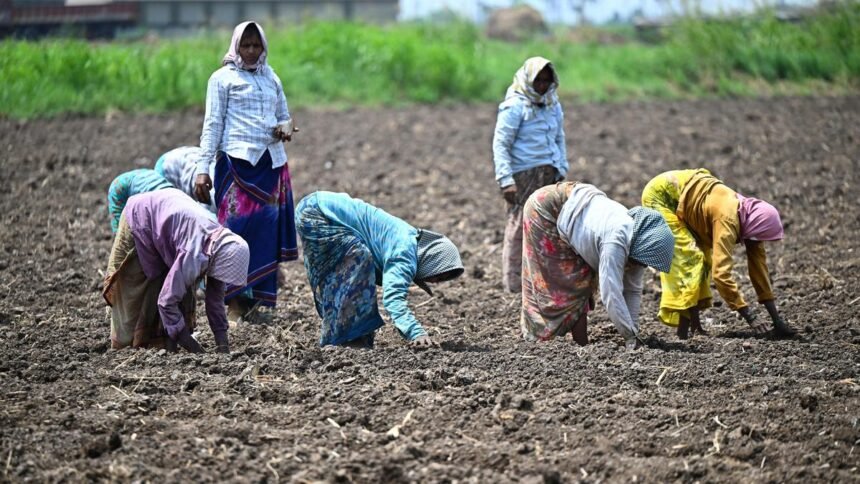
With the India Meteorological Department (IMD) confirming that El Niño conditions will strengthen during the ongoing monsoon season , Union Agriculture Minister Shivraj Singh Chouhan has unequivocally ruled out a narrative of panic, asserting that “preparation, not fear” will be the guiding principle to safeguard the Kharif crop .
Speaking during a high-level review meeting, Chouhan emphasized that while the weather forecasts are being taken “very seriously,” the government is fully prepared to mitigate any adverse impact on the agricultural sector .
“Rather than worrying, preparation is required. Contingency plans will be made for affected districts and crop changes will be considered wherever necessary,” Chouhan told reporters .
The El Niño Threat
The India Meteorological Department (IMD) has projected a below-normal southwest monsoon for 2026, with rainfall likely to be around 90 per cent of the Long Period Average (LPA) . The latest forecasts indicate a further strengthening of El Niño conditions during the June-September season .
El Niño, characterized by the unusual warming of surface waters in the eastern tropical Pacific Ocean, is typically associated with drier and hotter conditions in India, which poses a risk to crop yields .
‘Activating Contingency Plans’
In response to the IMD’s warnings, the Ministry of Agriculture has activated measures to move beyond “mere paperwork.” The government has identified 197 districts across the country as most vulnerable to the impacts of El Niño, where contingency plans are being urgently implemented .
The strategy includes promoting drought-tolerant crop varieties, shifting to less water-consuming crops such as millets and pulses, and ensuring the availability of short-duration seeds for resowing .
“States have been asked to prepare clear strategies for re-sowing, life-saving irrigation and alternative crops if rainfall gaps of two to four weeks occur,” an official statement said .
Seed and Fertilizer Availability
Chouhan reassured farmers that there is adequate availability of agricultural inputs. Against the total requirement of 173 lakh quintals of seeds for the Kharif season, 192 lakh quintals are currently available . A buffer stock of 1.74 lakh quintals is also being maintained by the National Seed Corporation for emergency situations .
Fertilizer stocks are also comfortable, standing at 200 lakh tonnes as of now against the total Kharif demand of 390 lakh tonnes .
A Unified Approach
Chouhan reiterated the need for a unified strategy, coining the term “Team Agriculture — One Nation, One Agriculture, One Team” . He called for close coordination between the Centre, States, ICAR institutions, and agricultural universities to ensure that scientific advisories reach farmers on time.
The government will strengthen digital and call-centre advisories to reach farmers quickly and monitor pest and disease risks linked to weather changes .
The Bigger Picture
Despite the looming El Niño, the government remains optimistic about long-term output. India is on track to achieve a record foodgrain production of 376.56 million tonnes in the 2025-26 crop year .
However, Chouhan stressed the importance of crop diversification. With rice output targets for 2047 already met, ICAR Director General M.L. Jat argued that India should reduce its rice acreage from 50 million hectares to 35 million hectares, redirecting that land to oilseeds and pulses to achieve self-reliance .