
From climate-controlled greenhouses to robotic sorting machines, Japan’s agricultural sector is embracing innovation to boost exports and address an ageing workforce
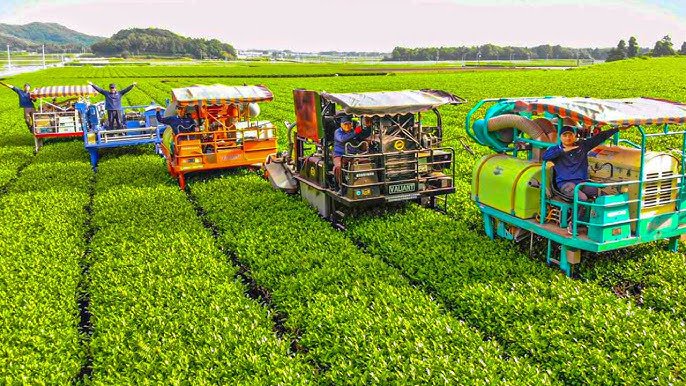
Japan’s manufacturing sector is renowned for cutting-edge techniques based on the philosophy of continuous improvement. In contrast, the nation’s agricultural sector is characterised by an ageing workforce that relies heavily on time-honoured practices. Now, however, industrial technology is helping modernise Japan’s agriculture sector and increase exports.
In 2019, Japan’s combined annual exports of agricultural, forestry and fisheries products and food were JP¥912.1 billion (US$8.79 billion), marking a record high for the seventh consecutive year. Yet Japan’s agricultural industry has even greater ambitions, with plans to reach export targets of JP¥2 trillion by 2025 (US$19.28 billion), and JP¥5 trillion (US$48.21 billion) by 2030. While these figures are impressive, conventional Japanese farming techniques are presently labour-intensive and the average age of farmworkers is almost 67.
Smart agriculture in practice
One example of this synergy can be found with Bell Farm. Located in Kikugawa, Shizuoka prefecture, it cultivates Akademi tomatoes, a medium-sized fruit. Being sweet and flavourful, this variety lends itself well to use in dishes such as salads and is typically eaten raw in Japan. Tomatoes are Japan’s second-largest agricultural crop after rice on a monetary basis.
Bell Farm is a realisation of “smart agriculture”: using cutting-edge technology and combining it with corporate farming management to achieve the producer’s goal of planned production based on customers’ needs. “Instability is a part of agriculture. Many factors could affect the harvest, so you usually try out various things based on your experience,” says Bell Farm’s managing director Norihisa Okada. “To me, ‘smart agriculture’ involves digitising the process and making it more logical, and then analysing and learning from the results.”
Since 2019, Bell Farm has been using the Profarm T-Cube, a climate-controlled greenhouse which is central to the operations, helping with their goal of producing a harvest year-round. Robotic sorting machines equipped with image recognition software, which can check sugar-content, damage and the size of each tomato, are also used.
Technology from automotive expertise
These technologies have been developed by an offshoot of the Denso Group, a global automotive components company, using its expertise in robotics and industrial automation to create solutions for agriculture.
Okada says smart agriculture is also a boon for producers in terms of the workforce. “It can reduce the need for physical labour, saving time and manpower, while also providing a way for those without a background in agriculture to enter the sector, such as the tech-savvy younger generation,” he explains.
Certification and global standards
Going forward, it will be important for producers to show their commitment to quality and integrity when promoting Japan’s agricultural exports. “I believe that introducing globally recognised and credible Good Agricultural Practice (GAP) standards to their production activities is the most effective way to showcase this,” says Katsuhisa Takesue, technical key account manager Japan for GLOBALG.A.P.
As the world’s most widely-implemented farm certification program, GLOBALG.A.P. promotes Good Agricultural Practice and works with producers and independent third-party auditors. Bell Farm has already obtained certification through GLOBALG.A.P. for its tomatoes.
The importance of branding
Establishing a national brand is a major factor that defines countries with a successful export strategy, says Yuito Yamada, a partner at McKinsey & Company Japan with a speciality in agriculture, energy and sustainability. Having a deep understanding of markets and a clear marketing strategy consistent between domestic and export markets are also key.
“Japan’s agricultural sector needs to maintain and develop the current high-quality image of Japanese agricultural products, and adopt biologicals, genomic insight and cost-effective farming automation, where it has strengths, and to establish and implement marketing and export strategies,” notes Yamada.
The future
Okada and his colleagues at Bell Farm are proud to be at the forefront of this transformation in Japan’s agriculture. “I think that we can all feel we’re working in the midst of change,” he says. “It’s an exciting business to be in.”