
President Donald Trump’s proposal to import beef from Argentina to lower domestic prices has sparked fierce opposition from cattle ranchers and Republican lawmakers
President Donald Trump, fresh off approving a $20 billion bailout for Argentina, has argued that the United States should import beef from the South American country to lower domestic red meat prices, which are up 50% in five years and spiked in 2025.
“We would buy some beef from Argentina,” he told reporters aboard Air Force One. “If we do that, that will bring our beef prices down.”
The proposal has immediately run into opposition—from both the domestic meat industry and some Republican lawmakers who argue the move will hurt cattle farmers.
Ranchers and Lawmakers Push Back
“Bottom line: if the goal is addressing beef prices at the grocery store, this isn’t the way,” GOP Sen. Deb Fischer of Nebraska, which has the second-most cattle of any state, said on social media.
“Right now, government intervention in the beef market will hurt our cattle ranchers,” Fischer continued. “The U.S. has safe, reliable beef, and it is the one bright spot in our struggling ag economy.”
“This is not America first!” said Rep. Thomas Massie of Kentucky. “We don’t need the U.S. flooded with beef from Argentina after our cattle ranchers have taken a beating over the last several years.”
U.S. Cattlemen’s Association President Justin Tupper said in a statement that “the current price of beef on grocery store shelves reflects the true, inflation-adjusted cost of raising cattle in America today.”
Why Are Beef Prices High?
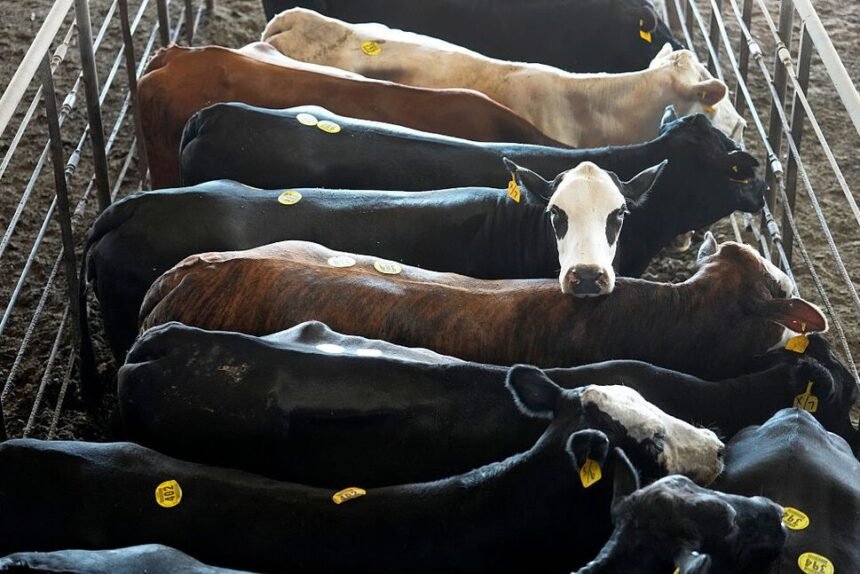
The U.S. cattle herd as of Jan. 1 totaled 86.7 million cattle and calves, according to the USDA. That’s down about 8% from 2019 and the lowest number of cattle since 1951. Several seasons of stubborn drought in the United States and the high cost of feed have contributed to the decline.
Imports from Mexico have also dropped, partly because U.S. officials cut them off in an effort to prevent the spread of the New World screwworm fly. The United States has also imposed tariffs on other major beef exporters including Canada, Australia and Brazil.
All of that has reduced the supply of beef, while demand has stayed strong. The result: higher prices.
Trump Responds
On social media, Trump claimed that his tariffs had protected ranchers from overseas competition.
“It would be nice if they would understand that,” he said, “but they also have to get their prices down, because the consumer is a very big factor in my thinking, also!”
The pushback included Trump-backing farmers, such as Meriwether Farms, a beef producer in Wyoming, that complained on social media: “Dear @POTUS Trump, We love you and support you – but your suggestion to buy beef from Argentina to stabilize beef prices would be an absolute betrayal to the American cattle rancher.”
Administration Responds
The criticisms appear to have landed. Agriculture Secretary Brooke Rollins told CNBC that the administration was working on “a pretty big package” of measures to reward ranchers and boost the number of meat processing plants nationwide, which could be unveiled “perhaps in the next day or two.”