

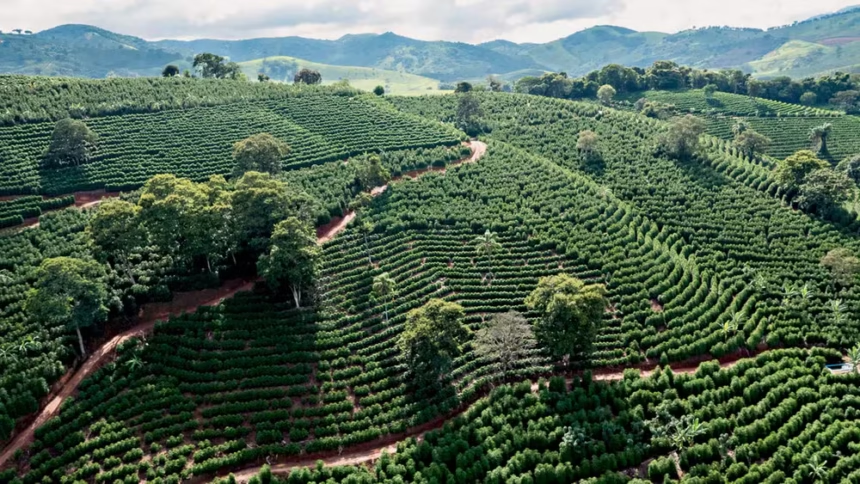
Guaxupé, Brazil – The coffee harvest in the key Brazilian states of Minas Gerais and São Paulo is progressing more slowly this year due to persistent rains and uneven bean ripening. According to a survey by Cooxupé, the Regional Coffee Growers’ Cooperative, fieldwork had reached only 58.3% of the crop as of July 24, a significant drop from the 67.1% harvested at the same point in 2025. The wet weather is not only delaying the harvest but also raising concerns about post-harvest quality and the potential for overlapping cycles.
Guilherme Vinicius Teixeira, Cooxupé’s geoprocessing coordinator, explained that the crop is not a bumper one but is still considered good. “Bean ripening was uneven because there were four flowering cycles,” he said during the cooperative’s eighth Coffee and Climate Forum. He noted that bean size and yields are average, with better-managed plantations performing well. However, the rains are affecting post-harvest work and creating risks to coffee quality, as some fruit has dropped from the trees. Teixeira stressed that a strong 2027 crop will depend on careful post-harvest management this year, as plants are experiencing overlapping cycles with flowering occurring while fruit remains on the branches.
Read us : Milwaukee Tool Unveils M18 Fuel 17-Inch Dual Battery String Trimmer for Professional Power
Agrometeorologist Marco Antônio dos Santos of Rural Clima attributed the early rains to an emerging El Niño pattern, which is expected to bring rainfall forward. Rain is forecast over the coming days in the coffee-growing regions, with a cold front moving across São Paulo and Minas Gerais. “Depending on the rainfall volume, it may not only disrupt the harvest but also trigger new flowering around mid-August,” Santos warned. August is expected to bring continued rainfall and high temperatures, with wet conditions persisting into September. While October is also forecast to be wet, supporting successful fruit set, hot air pockets could leave some regions dry in November. Santos emphasized that regardless of the strength of this El Niño, it will peak at the end of the year, potentially shifting rainfall patterns and reducing pressure over central Brazil.