

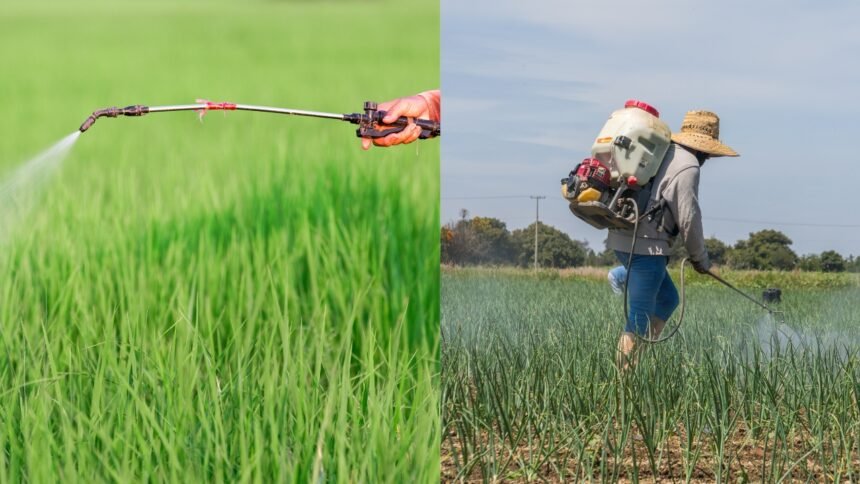
China’s Ministry of Agriculture and Rural Affairs announced on April 16, 2026, that it has launched a nationwide special enforcement campaign against the illegal production, sale, and use of prohibited and restricted pesticides. The move aims to safeguard agricultural product quality and food safety across the country.
A ministry official stated that the campaign will take strict action against violations involving banned and restricted pesticides while helping restore order and transparency in the pesticide market.
Three Key Focus Areas
The nationwide rectification drive will focus on three key areas of violation:
| Focus Area | Description |
|---|---|
| Illegal production | Unauthorized manufacturing of prohibited or restricted pesticides |
| Illegal sales | Distribution of banned pesticides through unauthorized channels |
| Illegal adulteration | Mixing prohibited substances with legal pesticides |
These three areas represent the most common and dangerous forms of pesticide-related violations in China’s agricultural sector.
Enforcement Actions and Inspections
Authorities will carry out a series of enforcement actions to ensure compliance:
| Action | Purpose |
|---|---|
| Inspections of manufacturers | Verify production practices and compliance |
| Inspections of dealers | Ensure only authorized products are sold |
| Product supervision and sampling | Test pesticides for banned substances |
| Scheduled inspections | Regular, planned checks |
| Surprise inspections | Unannounced visits to catch violations |
| Violation lists | Document offences for legal action |
The ministry emphasized that legal action will be taken based on the seriousness of offences – meaning minor violations may result in fines or warnings, while major violations could lead to criminal prosecution.
Strengthening Accountability and Coordination
The ministry has called for stronger accountability of local authorities to ensure the campaign’s success.
Levels of Coordination
| Level | Role |
|---|---|
| National | Policy direction and oversight |
| Provincial | Regional implementation |
| Municipal | Local enforcement |
| County | Ground-level inspections |
Cross-Boundary Cooperation
The campaign also requires greater cooperation between regions and departments. Pesticide violations often cross provincial boundaries, making inter-regional coordination essential.
Officials emphasized the need for:
- Disciplined enforcement – Consistent application of rules
- Standardized inspection procedures – Uniform methods across all regions
- Removal of local protectionism – No special treatment for local violators
“Local protectionism” refers to the practice of local authorities shielding local businesses from enforcement. The ministry’s explicit call to remove such protectionism is significant.
Why This Crackdown Matters
China is the world’s largest producer and consumer of pesticides. Illegal pesticides pose serious risks:
| Risk | Explanation |
|---|---|
| Food safety | Banned pesticides can leave harmful residues on crops |
| Environmental damage | Prohibited chemicals can contaminate soil and water |
| Human health | Exposure to banned pesticides can cause acute poisoning or chronic illness |
| Trade disruption | Contaminated exports can be rejected by importing countries |
| Market distortion | Illegal products undercut legal manufacturers |
Common Banned Pesticides in China
China has banned or restricted dozens of pesticides over the years, including:
| Pesticide | Reason for Ban/Restriction |
|---|---|
| DDT | Persistent environmental pollutant |
| Endosulfan | Highly toxic to humans and wildlife |
| Parathion | Acute toxicity |
| Methyl bromide | Ozone-depleting substance |
The current crackdown targets any production, sale, or use of such prohibited substances.
The Goal – ‘Effective and Lasting Results’
The ministry official emphasized that the campaign is not just a temporary enforcement action but aims to achieve effective and lasting results.
Short-Term Goals
| Goal | Method |
|---|---|
| Identify violators | Through inspections and sampling |
| Remove illegal products | Seizure and destruction |
| Penalize offenders | Fines, license revocations, criminal charges |
Long-Term Goals
| Goal | Method |
|---|---|
| Restore market order | Transparent, legal pesticide market |
| Deter future violations | Strong enforcement sends a message |
| Protect food safety | Reduced illegal residues on food |
| Build consumer trust | Confidence in agricultural products |
“Officials emphasized the need for disciplined enforcement, standardized inspection procedures, and the removal of local protectionism to ensure the campaign achieves effective and lasting results.”
Context – China’s Ongoing Food Safety Efforts
The pesticide crackdown is part of a broader food safety push in China. In recent years, the government has:
- Strengthened food safety laws – Including tougher penalties for violations
- Increased inspections – More frequent and more rigorous
- Improved traceability – Tracking food from farm to table
- Cracked down on additives – Illegal food additives have been a major focus
The pesticide campaign extends these efforts to the input side of agriculture – ensuring that what goes into growing food is safe before crops are even harvested.
Implications for Farmers and Agribusiness
For Farmers
| Implication | Action Needed |
|---|---|
| Legal pesticide use only | Use only approved products |
| Record-keeping | Maintain records of pesticide purchases and applications |
| Inspection readiness | Be prepared for farm visits |
| Alternative methods | Consider integrated pest management (IPM) |
For Pesticide Manufacturers and Dealers
| Implication | Action Needed |
|---|---|
| Strict compliance | Ensure all products are approved |
| Documentation | Maintain clear production and sales records |
| No adulteration | Do not mix banned substances |
| Cooperate with inspections | Allow scheduled and surprise visits |
For Exporters
| Implication | Action Needed |
|---|---|
| Reduced contamination risk | Lower chance of export rejections |
| Documentation requirements | Maintain proof of legal pesticide use |
| Market access | Compliance with international standards |
International Context – Global Pesticide Regulation
China’s crackdown aligns with global trends toward stricter pesticide regulation:
| Region/Country | Recent Actions |
|---|---|
| European Union | Banned multiple pesticides; strict residue limits |
| United States | EPA reviews and restricts certain pesticides |
| India | Proposed bans on several pesticides |
| Brazil | Tightening approval and monitoring processes |
As the world’s largest pesticide producer and consumer, China’s enforcement actions have global implications for food trade, environmental protection, and public health.
A Serious Commitment to Food Safety
China’s nationwide crackdown on illegal pesticides represents a serious commitment to agricultural product quality and food safety. By targeting illegal production, sales, and adulteration – and by calling for coordinated enforcement across all levels of government – the Ministry of Agriculture and Rural Affairs is sending a clear message: violations will not be tolerated.
The campaign’s success will depend on consistent enforcement, the removal of local protectionism, and cooperation across regions and departments. If successful, it could:
- Reduce food safety incidents related to pesticide residues
- Protect farmers from exposure to dangerous chemicals
- Support legal pesticide manufacturers by removing unfair competition
- Enhance China’s reputation as a source of safe agricultural products
For now, the message is clear: China is serious about cleaning up its pesticide market. Farmers, manufacturers, and dealers should take note – and comply.