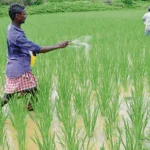

For the 150 million farmer households across India, climate change is not a distant projection—it is a lived reality. Unseasonal rain, prolonged dry spells, cyclones, and rising pest attacks are no longer anomalies but the new normal.
The 2025-26 kharif season saw erratic monsoons across India’s key agricultural regions. Punjab’s paddy belt faced rainfall deficits reaching 40% during critical tillering stages, while central Madhya Pradesh suffered unseasonal heavy downpours just before harvesting pulses, causing an estimated 22% yield loss.
The path to climate resilience can no longer be incremental. It requires a fundamental reimagining—from cropping systems and financial infrastructure to the very technology ecosystem farmers rely on.
The problem with weather forecasting
India’s weather forecasting system, despite technological upgrades, continues to fail farmers at the village level. A 2024 study by the Council on Energy, Environment and Water (CEEW) found that while 78% of farmers in a surveyed sample reported owning smartphones, only 26% found weather forecasts “useful” for farm-level decision-making.
The gap exists at multiple levels. Forecasts are often not hyperlocal enough; when a warning is issued for an entire district, a farmer has no way of knowing whether her specific 2-hectare plot will experience the predicted weather event. Agricultural extension services remain understaffed, with an estimated one agricultural extension officer for every 2,500 farmers in most states, leaving farmers without adequate support to interpret and act on forecast data.
The next generation of agro-advisory
Agri-tech startups are beginning to fill the gap with hyperlocal, AI-enabled agro-advisory platforms. Chennai-based Aquaconnect, for instance, now provides AI-enabled pond management, but generic solutions for crops are also emerging.
Building on global examples like Pakistan’s CropMax—which delivers farm-specific recommendations to 150,000 registered farmers through satellite data and AI—India’s platforms are scaling fast. CropIn’s SmartFarm platform now covers 8 million acres and provides irrigation and pest management alerts specific to each block, grounded in local microclimates.
The key differentiator for next-generation platforms is their ability to process a farmer’s plot boundary, soil type, crop variety, and the specific weather forecast for that location to generate a single, actionable recommendation: “Irrigate tomorrow morning for two hours, not today evening.”
Financial resilience through parametric insurance
Even with perfect forecasts, farmers cannot protect themselves from extreme weather events without financial safety nets. Traditional crop insurance in India suffers from delayed claim settlement and complex assessment procedures. The median time between a weather event and claim settlement remains over nine months, leaving farmers with no liquidity when they need it most.
Parametric insurance offers a faster, more transparent alternative. Payouts are triggered automatically when an adverse weather parameter—rainfall above a certain threshold, temperature below a specific level—is recorded at a nearby weather station, with no need for individual loss assessment.
In a 2024 pilot covering 15,000 farmers in Bihar, parametric insurance payouts were triggered within seven days of a drought declaration, with an average claim amount of ₹7,200 per farmer. Compared to the national average wait of nine months for traditional claims, the difference is transformative.
The National Bank for Agriculture and Rural Development (NABARD) is working on a national parametric insurance framework, though concerns remain about coverage gaps, basis risk, and the availability of reliable weather stations in remote areas.
Climate-resistant crops
The third pillar is the physical infrastructure of farming itself—the seeds, soil, and water systems. IARI has developed climate-resistant seed varieties: drought-tolerant chickpea varieties with deeper root systems that access subsoil moisture, flood-tolerant rice submergence varieties that can survive complete submergence for up to 14 days, and heat-tolerant wheat that withstands terminal heat stress up to 30°C.
However, adoption has been slow. A 2025 field survey by ICRISAT found that while 85% of farmers were aware of climate-resistant varieties, only 34% had planted them. The bottleneck is not awareness but availability. Distribution channels remain clogged with traditional varieties, and small farmers often cannot access the limited stocks of improved seeds during peak sowing periods.
Micro-irrigation presents a similar challenge. Drip and sprinkler systems can reduce water use by 40-60% while increasing yields, but national penetration remains low. The Pradhan Mantri Krishi Sinchayee Yojana (PMKSY) has expanded coverage, but adoption remains concentrated in water-scarce states like Rajasthan and Gujarat, with water-abundant states like Punjab and West Bengal lagging.
The path forward
For Indian agriculture to become truly climate-resilient, the recipe is known. It includes hyperlocal agro-advisory, parametric insurance, climate-resistant seeds, and expanded micro-irrigation. The challenge is not technological but institutional and financial.
Scaling agro-advisory platforms requires public-private partnerships to combine technology with trusted on-ground delivery through local cooperatives and extension networks. Expanding parametric insurance requires investment in automated weather stations and capacity building for farmers and bankers.
Disseminating climate-resistant seeds requires overhauling distribution systems to ensure improved varieties reach small farmers before each sowing season. Rolling out micro-irrigation at scale requires subsidy restructuring and last-mile financing for smallholders.
The stakes could not be higher. With nearly half of India’s workforce dependent on agriculture, and the sector contributing approximately 17% of the national GDP, climate resilience is not just an environmental necessity—it is an economic imperative. The technology exists. The question is whether India can build the delivery systems required to take it to the last farmer.