
Global food commodity prices rose to their highest level in over two years during July 2026, as a sharp jump in vegetable oil prices and record-setting meat costs more than offset declines in other commodity groups, the Food and Agriculture Organization of the United Nations (FAO) reported on Friday.
The FAO Food Price Index, which tracks monthly changes in the international prices of a basket of globally-traded food commodities, averaged 130.1 points in July. This represents a 1.6 percent increase from June and marks the index’s highest reading since February 2023 . While this is a significant increase, the index remains 18.8 percent below the all-time peak reached in March 2022 following the escalation of the war in Ukraine .
Vegetable Oils Hit Three-Year High
The FAO Vegetable Oil Price Index surged 7.1 percent in July to reach 166.8 points, its strongest level in three years, as robust global demand pushed prices higher across several oil categories .
Palm oil prices led the charge, buoyed by solid global demand and improved price competitiveness. Soy oil prices climbed on the back of strong biofuel demand expectations in the Americas, while sunflower oil prices rose amid tightening export supplies from the Black Sea region . The only exception was rapeseed oil, which slipped as new European harvest supplies entered the market .
Meat Prices Reach Historic High
The FAO Meat Price Index climbed 1.2 percent to 127.3 points, setting a new all-time record . The increase was largely attributed to elevated prices for both bovine and ovine meats, driven by persistently tight supply conditions and strong import demand from China and the United States .
US beef imports increased after drought conditions reduced domestic cattle herds, while China has imported record volumes of beef amid the product’s growing popularity in the country . Poultry meat prices also posted a slight increase following Brazil’s return to avian influenza-free status, which prompted the resumption of shipments to key buyers .
In contrast, pig meat prices declined amid ample global supplies and weaker demand, particularly within the European Union .
Mixed Trends in Other Categories
While vegetable oils and meat drove the overall index higher, other commodity groups showed mixed performance:
Cereals, dairy, and sugar prices declined during July, partially offsetting the overall index increase . This divergence highlights the uneven nature of the current inflationary pressures across different food categories.
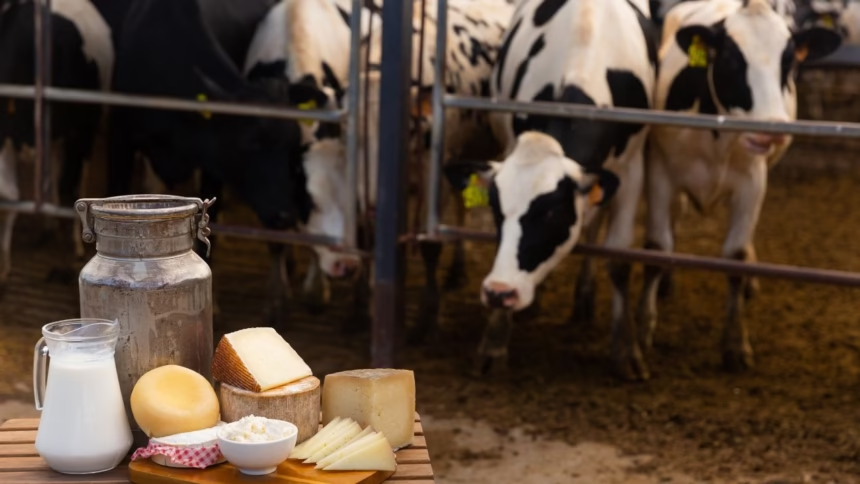
The Cereal Price Index fell as global wheat and maize supplies remained adequate despite ongoing disruptions to Black Sea trade routes . The Dairy Price Index dropped sharply, with the index now more than 20 percent below its July 2022 levels, reflecting ample global milk production and subdued demand in key importing regions . Sugar prices also declined, falling 4.7 percent in April (the latest available data for that category), primarily due to expectations of ample global supplies, particularly from major Asian producers like China and Thailand .
Outlook
The surge in the July index reflects the persistent vulnerability of global food markets to supply-side shocks and demand pressures, even as overall inflation in some economies shows signs of moderation. The record high in meat prices and the three-year peak for vegetable oils underscore how supply chain adjustments and changing consumption patterns continue to reshape global food trade dynamics.
The August edition of the FAO Food Price Index is scheduled for release on September 4, 2026.