

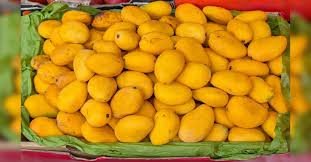
India’s mango export season has delivered robust growth in 2026, with shipments reaching more than 45 countries and volumes already surpassing last year’s total figures. The United States and the United Arab Emirates emerged as the largest buyers, while new hybrid varieties and expanded promotional campaigns point to further gains in the years ahead .
US market leads the expansion
Exports to the United States, the world’s largest mango importer, are on track to grow by more than 30 per cent this season, according to APEDA Chairman Abhishek Dev. Shipments to the US have already exceeded last year’s full-season volumes nearly a month before the season concludes .
To sustain this momentum, the Agricultural and Processed Food Products Export Development Authority (APEDA) has launched mango promotion campaigns across major US cities, including Seattle, Los Angeles, Washington, New York and Atlanta. The push extends to nearly 20 countries this year, including the Czech Republic, Malaysia, Spain, the UAE and Oman .
The Sonpari debut
A new hybrid variety called Sonpari has made its export debut in the United States this season. Developed by Navsari Agricultural University as a cross between Alphonso and Banganapalli, the variety combines Alphonso-like flavour with larger fruit size and resistance to the spongy tissue disorder that affects Alphonso .
The first commercial harvest from orchards planted in Gujarat’s Gir region in 2021 yielded a five-tonne crop, which was processed, packed and transported to Mumbai for mandatory radiation treatment before shipment by air cargo to Washington and New York .
Sonpari is positioned as a premium offering, fetching prices of up to US$70 per box, compared to around US$45 for Kesar . Chetan Medapara of exporter Hortica Foods LLP said the variety is expected to attract interest from the wider Indian diaspora and local American consumers alike .
Shifting preferences: Kesar gains ground
Export demand has gradually shifted toward the Kesar variety over the past few years. Medapara explained that buyers increasingly prefer Kesar because of spongy tissue issues in Alphonso, which can affect fruit quality after ripening. “In a box of 12 fruits, four or five may develop internal defects. That is why buyers increasingly prefer Kesar,” he said .
Gujarat’s Kesar crop performed well this season, with stable weather conditions delivering good quality. The US and UK markets have seen demand increase by around 30-40 per cent compared to last year .
New markets opening
India’s export basket is becoming more diversified. The number of products exported has increased from around 280 a decade ago to nearly 500 today, out of a possible 790 products listed under APEDA’s schedule .
Recent market access wins include Russia allowing Indian potatoes and pomegranates, Vietnam permitting Indian grapes, and Australia approving imports of Indian pomegranates . Meanwhile, India’s agricultural and processed food exports reached USD 53 billion in the last financial year, keeping the country among the world’s top 10 agri-exporters .
Resilience amid phytosanitary challenges
Despite Japan suspending imports of Alphonso and Kesar varieties over compliance issues at Vapour Heat Treatment facilities, the impact on overall exports has been minimal. Commerce Secretary Rajesh Agrawal noted that Japan accounts for a very small share of India’s mango export market .
Similarly, Nepal’s tighter regulations on pesticide residues have not disrupted trade significantly. Agrawal confirmed that Indian mango exports to Nepal are continuing and actively expanding .
What lies ahead
Exports this season have already exceeded last year’s total of approximately USD 56.5 million . With APEDA expecting overall mango exports to double over the next one to two years on the back of expanded outreach, India’s position in the global mango trade is set to strengthen further .
As the Kesar season draws to a close, exporters are preparing to ship northern Indian varieties such as Langda and Chausa from Uttar Pradesh and Bihar, extending the season by several weeks . For growers and exporters alike, the growing global appetite for Indian mangoes points to a promising future.