

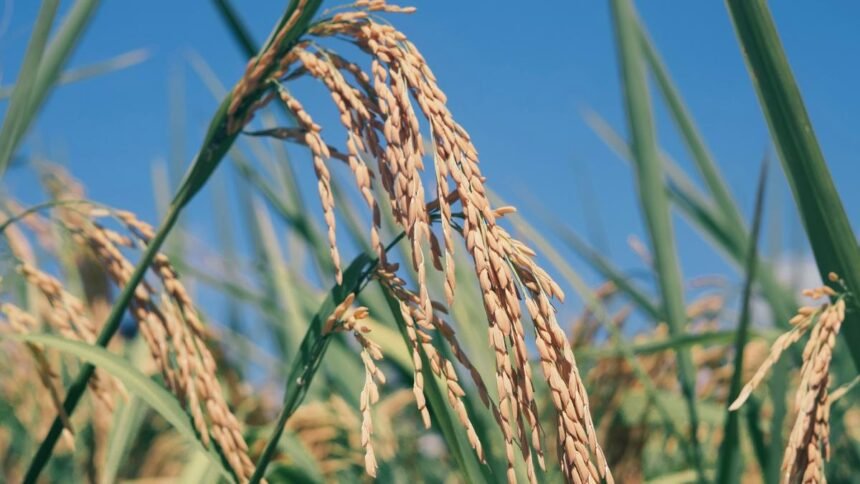
A new study from the University of California has revealed that rice, a crop particularly sensitive to cold, can adapt to low temperatures within a single generation, exhibiting a surprising “memory” of cold exposure that is passed down to its offspring. This discovery challenges traditional understanding of crop adaptation and could offer a breakthrough for developing climate-resilient varieties .
The Finding
The study, conducted by researchers at UC Riverside and UC Davis, discovered that a rice plant’s response to cold leaves a durable epigenetic mark that can be inherited by the next generation . The offspring inherit what researchers describe as a “stress memory,” allowing them to react to their own cold exposure more quickly and effectively .
The researchers identified that this memory is mediated by a specific epigenetic mechanism: RNA methylation. This is a process through which the environment physically alters the plant’s genes. The researchers successfully identified genes that are part of this RNA methylation memory process, which serves as a “dimmer switch” for producing proteins necessary for cold survival .
What This Means for Rice
For a crop that originated in tropical climates and is highly vulnerable to cold damage, this rapid adaptation is a game-changer. The ability to “remember” cold exposure and pass it down suggests that rice plants can, under the right conditions, prepare their offspring for potential threats much faster than the slow pace of natural evolution would allow . This would allow a plant to create better-protected progeny in just one generation.
Researchers noted that this epigenetic inheritance is a “time-sensitive” mechanism, meaning the response is only activated when needed and can be conserved for future use .
Impacts on Global Food Security
Rice is the primary food source for over 3.5 billion people globally . As climate change intensifies, the risk of unexpected cold snaps—such as “false springs”—poses a direct threat to agricultural production. The study’s findings could lead to “epigenetic breeding” —a technique to develop rice and other crops that are more resilient to climate fluctuations .
“I think there is immense potential in this research,” said the study’s lead researcher. “We’ve discovered a survival mechanism that’s always been there, but we can now manipulate it for food security.”