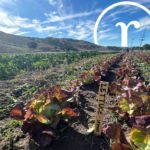


For decades, the narrative of Indian agriculture has been one of fragmentation: small landholdings, debt-ridden farmers, and a cycle of dependency on money lenders and input suppliers. But a quiet shift is underway. New models of organic farmland investment are emerging that do not extract value from the land—instead, they turn farmers from tenants into owners, and from laborers into stakeholders.
The key is moving away from exploitative land leasing toward shared-value partnerships where farmers gain equity, guaranteed income, and long-term security.
The Problem with Traditional Land Leasing
Conventional land leasing in India has historically left farmers vulnerable. Landowners lease their land for fixed, often low rents, while tenant farmers bear all the risks of crop failure, price crashes, and input costs. Neither party has a long-term stake in soil health or sustainable practices.
The result is land degradation, short-term thinking, and a farming community that remains trapped in poverty despite working the land.
Producer Companies: Farmers as Shareholders
One of the most promising models for turning farmers into owners is the Producer Company—a legal structure under the Companies Act that allows farmers to pool their land, resources, and labor while retaining ownership and decision-making power.
A proposal submitted to the Ministry of Agriculture outlines how this works: farmers in a village form a Producer Company where they are the shareholders and owners. They offer their land for joint cultivation against an annual rental lease agreement, with rent paid in advance to build confidence . The company then operates like an industry—employing farmers, providing salaries and benefits, and marketing products directly .
The model has been tested on a small scale in Rakhalgeria village near IIT Kharagpur, where farmers pooled over 300 acres and received endorsements from agricultural universities .
The Andhra Pradesh Model: APCNF
Andhra Pradesh’s Community Managed Natural Farming (APCNF) initiative, managed by Rythu Sadhikara Samstha (RySS), represents one of India’s most ambitious efforts to transition smallholder farmers to organic practices while improving their economic position .
The program is built around women self-help groups (SHGs), ensuring local governance and transparency. Farmers are trained through community resource persons and demonstration plots . The results have been significant: over 850,000 families have adopted natural farming, with 83,752 achieving a 25% income increase .
What makes APCNF different is its participatory governance model. Farmers choose techniques, lead planning processes, and track results using mobile dashboards. Feedback loops ensure adaptive learning while accountability is shared among stakeholders .
The World Bank has provided USD 100 million to scale this effort, and the model is now being studied for replication in other Indian states and African countries .
Land Leasing with Profit-Sharing
Another emerging model is land leasing that moves beyond fixed rent to profit-sharing. Companies like Sabar Farms offer landowners a choice: fixed rent of ₹15,000–30,000 per acre per year, or a 30% share of final crop value .
For farmers who want to retain involvement, this hybrid model transforms them from passive landowners into active partners. They share in the upside when harvests are good, and the company absorbs the operational risks .
The model requires minimum land area (40 acres) and existing irrigation, making it suitable for consolidating fragmented smallholdings into viable commercial units .
Community Land Ownership: The Co-op Model
Inspired by international examples, community-led land ownership is also gaining traction. In the UK, the Babbinswood Farm Community Benefit Society raised funds through a community share offer to purchase organic farmland and maintain it in organic production. Over 700 community shareholders, some from as far as Australia and France, contributed to keep the land from being sold on the open market .
While India has fewer examples of community land purchase due to land ceiling laws, the cooperative model for farm management is well-established. Farmer Producer Organizations (FPOs) and cooperatives allow smallholders to aggregate land, access better inputs, and negotiate better prices without selling their individual ownership .
The Role of Public-Private Partnerships
Scaling these models requires collaboration. Public-Private Partnerships (PPPs) in organic farming combine government policy support with private sector innovation and NGO grassroots reach .
The government has launched flagship organic initiatives like Paramparagat Krishi Vikas Yojana (PKVY) and Mission Organic Value Chain Development for North Eastern Region (MOVCDNER), offering input subsidies, training, and certification support . However, these schemes often lack market linkages and post-harvest logistics—gaps that private partners can fill.
Corporate pilots from ITC, Tata Chemicals, and Mahindra Agribusiness show how contract farming and tech integration can build farmer trust. These models include risk-sharing measures like minimum support prices, crop insurance integration, and buy-back arrangements .
Technology as an Enabler
Digital platforms are making farmer-owner models more transparent and scalable. AgriLease Connect, a proposed platform, offers a B2B2C marketplace for farmland leasing with legal contracts, real-time IoT monitoring, and blockchain for secure agreements .
Investors can co-own managed agricultural projects, while farmers receive guaranteed annual rental income while retaining land ownership . This formalizes what has traditionally been an informal, trust-based market.
Precision agriculture technologies—AI-powered robots, IoT sensors, satellite imagery—are also reducing input costs and improving yields, making organic farming more economically viable for smallholders .
The Role of NGOs and Knowledge Partners
NGOs play a vital role in ensuring these models remain farmer-centered. They help build trust, create awareness about organic practices, and facilitate Participatory Guarantee Systems (PGS) for certification, reducing costs and ensuring market credibility .
Knowledge partners like ICAR, agricultural universities, and FAO provide science-backed support for organic transitions, ensuring that farmer training is backed by empirical research .
Challenges and the Road Ahead
Despite the promise, challenges remain. Fragmented coordination between government agencies, corporates, and NGOs often leads to confusion. Many initiatives lack a unified governance structure .
Political turnover disrupts continuity. Changes in local leadership can delay approvals and reduce accountability. Programs may be paused or redirected, affecting farmer confidence .
There is also the challenge of scale. While pilot projects have succeeded, replicating them across India’s diverse agro-climatic zones requires adaptation, not just duplication.