

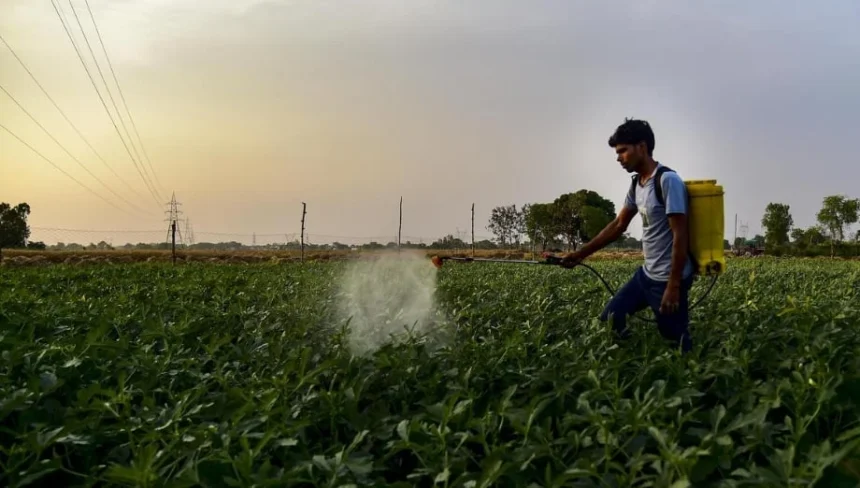
An industry body of pesticide manufacturers has urged the Union Agriculture Secretary to bring in targeted changes in the draft Pesticides Management Bill to ensure farmers get faster access to effective crop protection technologies.
This comes even as Union Agriculture Minister Shivraj Singh Chouhan said in Lucknow on Friday that the Union government will bring an amended Seeds and Pesticide Management Bill in the upcoming session of Parliament.
Key Industry Demands
| Demand | Details |
|---|---|
| PRD Framework | Time-bound Protection of Regulatory Data (PRD) framework for new molecules and new uses |
| Duration Proposed | Approximately 5 years from first registration |
| Purpose | Create predictable pathway for newer solutions; incentivise innovation |
CropLife India, the industrial body of pesticide and crop protection chemicals manufacturers, called for inclusion of a time-bound Protection of Regulatory Data (PRD) framework for new molecules and new uses.
In its recommendations to the Ministry on the proposed law, the body said the current draft does not address the policy gap contributing to this innovation lag.
The Problem: Delayed Access to Newer Technologies
| Consequence | Impact |
|---|---|
| Older Chemistries | Farmers remain dependent on older products |
| Resistance Build-up | Resistance builds faster, spray intensity rises |
| Residue Expectations | Harder to meet tightening residue norms in domestic and export markets |
“When farmers remain dependent on older chemistries for too long, resistance builds faster, spray intensity rises, and it becomes harder to meet tightening residue expectations in domestic and export markets,” a statement by CropLife India said.
Newer crop protection technologies are more targeted, lower-dose, and better aligned to evolving pest pressures, yet their introduction in India is often delayed.
The Investment Barrier
| Aspect | Details |
|---|---|
| Requirement | Major investment in safety, efficacy, residue, and environmental data |
| Current Issue | No clear framework governing how data is used |
| Result | Limited incentive to introduce newer technologies early in Indian market |
Bringing a new molecule or new use to India requires major investment in safety, efficacy, residue, and environmental data. “Without a clear framework governing how that data is used, there is limited incentive to introduce newer technologies early in the Indian market,” the association said.
The proposed limited, time-bound PRD framework of about five years from first registration would create a more predictable pathway for newer solutions to reach farmers faster, while allowing competition through independent data generation.
Export Pressure
| Aspect | Details |
|---|---|
| Market Pressure | Stricter residue norms in EU and other markets |
| Tea Exports | ~40 million kg of premium tea exports to Europe and UK exposed to tighter residue requirements |
The statement added that stricter residue norms in markets such as the European Union are already pressuring Indian exports. “Industry bodies in Assam have flagged that nearly 40 million kilograms of premium tea exports to Europe and the U.K. are exposed to tighter residue requirements,” they said.
Industry Chairman’s Statement
Ankur Aggarwal, Chairman of CropLife India, said: “Farmers today are dealing with more erratic pest pressures in the field. The final law must keep regulation science-based and time-bound, act firmly against illegal trade, and create a credible pathway for newer, safer and more effective crop protection technologies to reach farmers faster.”
What’s Next
Union Agriculture Minister Shivraj Singh Chouhan has indicated that the government will bring an amended Seeds and Pesticide Management Bill in the upcoming session of Parliament. Industry stakeholders are hopeful that their recommendations will be considered in the final draft.