
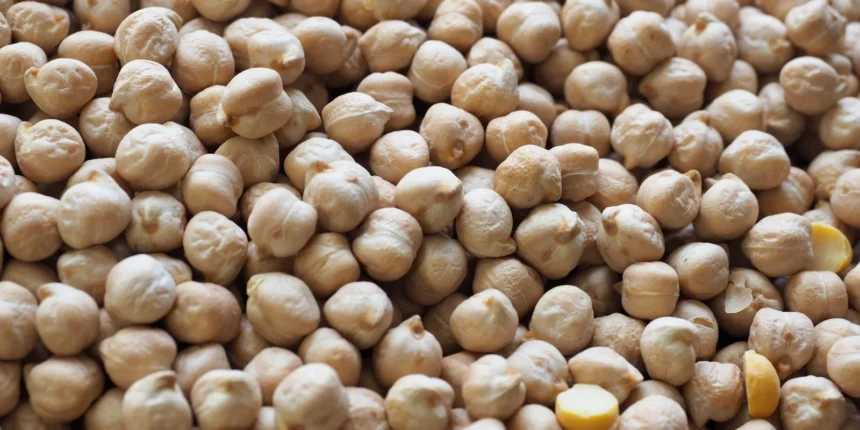
India’s pulse market is witnessing significant turbulence as chana (chickpea) prices face downward pressure from a perfect storm of cheaper imports, increased domestic production, and subdued demand. According to the India Pulses and Grains Association’s latest market analysis, the outlook for chana remains bearish while tur and urad prices stabilize within a narrow trading range.
Import Surge Dampens Market Sentiment
The flood of cost-effective chana and yellow pea imports continues to reshape market dynamics, creating a challenging environment for domestic producers. Millers across India are adopting a cautious approach, making only essential purchases as demand for processed products like chana dal and besan flour remains tepid. This conservative buying pattern reflects broader market uncertainty and adequate supply levels that prevent any meaningful price appreciation.
Market observers note that the availability of cheaper international alternatives has fundamentally altered the supply-demand equation, keeping domestic prices subdued despite seasonal factors that would typically support higher valuations.
Regional Price Volatility Reflects Market Stress
Spot market data reveals mixed price movements across major trading centers. Delhi witnessed a decline of INR 50 per 100 kg, with prices settling at INR 5,525-5,550 per 100 kg, attributed to weak sales activity and comfortable inventory levels. Conversely, Akola in Maharashtra recorded a modest increase of INR 25 per 100 kg, reaching INR 5,500-5,525 per 100 kg, driven by localized supply constraints.
This regional divergence highlights the fragmented nature of India’s agricultural markets, where local factors can override broader national trends.
Bumper Rabi Crop Adds Pressure
Agricultural fundamentals are also weighing heavily on price sentiment. The current rabi season has witnessed impressive chana sowing progress nationwide, with key producing states like Rajasthan and Gujarat reporting higher acreage compared to the previous year. Maharashtra’s substantial recovery in cultivation area, coupled with favorable growing conditions, further compounds the bearish outlook.
Industry experts warn that without significant catalysts—such as increased consumption, adverse weather during critical growth stages, or supportive government intervention—a sustained price recovery appears unlikely in the near term.
Tur Market Finds Balance Near MSP
The tur (pigeon pea) market presents a contrasting scenario, with prices expected to trade within a stable range. While current spot rates have dipped below the minimum support price of INR 8,000 per 100 kg, market participants anticipate this will trigger increased farmer participation in government procurement programs, effectively establishing a price floor.
Kalaburagi in Karnataka recorded a weekly decline of INR 410, with prices ranging between INR 6,609-7,419 per 100 kg. However, steady mill demand for fresh kharif arrivals and rising import costs are providing underlying support to market sentiment.
Urad Outlook: Myanmar Stocks Keep Supply Comfortable
Urad (black gram) prices are projected to remain range-bound as comfortable supply conditions persist. Myanmar’s stockpile of 150,000-200,000 tonnes of old inventory continues to flow into Indian markets, with new crop arrivals expected by mid-February. This steady import pipeline, combined with anticipated rabi urad arrivals by February-March, ensures adequate availability.
Price movements in major markets reflected this stability, with Chandausi in Uttar Pradesh maintaining steady rates at INR 6,725-6,750 per 100 kg, while Jalgaon in Maharashtra saw a modest increase of INR 100 to INR 6,300-6,900 per 100 kg.
Market Outlook: Cautious Optimism Amid Uncertainty
As India’s pulse sector navigates these challenging conditions, market participants remain watchful of several key factors: government procurement initiatives, import policy decisions, monsoon patterns, and evolving consumption trends. For farmers and traders alike, the coming months will be crucial in determining whether prices find a sustainable bottom or face continued pressure from oversupply and international competition.
The pulse market’s evolution will have far-reaching implications for food security, farmer incomes, and India’s agricultural trade balance in 2025.