

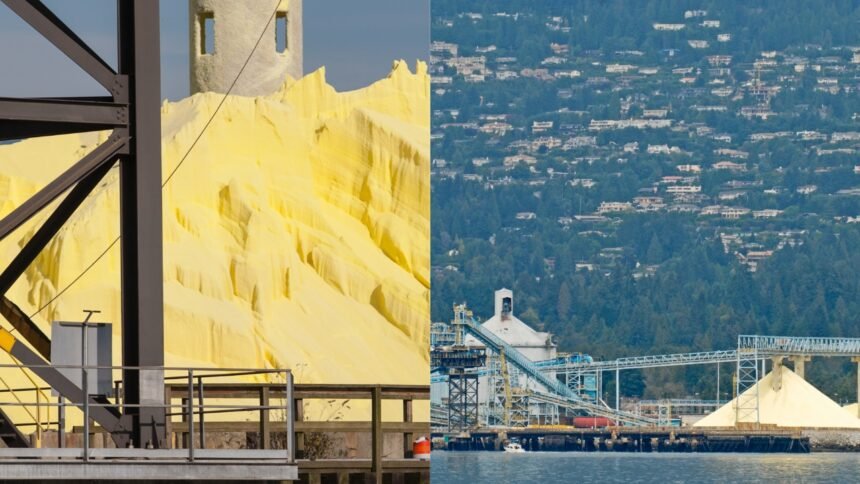
India is considering a proposal to restrict sulphur exports after industry lobby groups raised concerns about soaring prices and disruption to supplies from the Gulf, according to three sources aware of the development. The move could add further upward pressure on global sulphur prices, which are already climbing due to the Iran war and supply disruptions through the Strait of Hormuz.
Export restrictions would come at a critical time, as China is also set to restrict sulphuric acid exports from next month, potentially creating a perfect storm for global fertiliser and mining industries.
Why India Is Considering Export Curbs
A senior government official with knowledge of the proposed restrictions told Reuters:
“Sulphur supplies are tightening due to falling imports from the Middle East. Allowing exports could further pressure availability, so discussions are under way on whether exports should be limited.”
India’s Sulphur Balance
| Metric | Volume |
|---|---|
| Annual sulphur imports | ~2 million metric tons |
| Imports from Middle East | ~50% (nearly 1 million tons) |
| Annual sulphur exports | ~800,000 tons |
| Exports to China | >90% (~720,000+ tons) |
India meets more than half of its sulphur requirement through imports. With Middle East supplies disrupted, domestic availability has become a pressing concern. Industry lobby groups have asked the government in New Delhi to ban exports entirely, according to a company executive aware of the matter, who declined to be named due to sensitivity.
The Middle East Disruption – Strait of Hormuz
The Middle East accounted for around one-quarter of global sulphur production at 83.87 million metric tons last year, according to the US Geological Survey. However, the main shipping route through the Strait of Hormuz has been severely disrupted since the US-Israeli attacks on Iran began on February 28, 2026.
Impact of the Disruption
| Consequence | Detail |
|---|---|
| Falling imports | India’s sulphur arrivals from Middle East have dropped sharply |
| Price surge | Global sulphur prices already climbing |
| Domestic pressure | Fertiliser companies competing for limited supply |
| Government action | Refineries directed to prioritise local fertiliser makers |
India has already directed oil refineries – which account for most domestic sulphur output – to supply adequate amounts to local fertiliser companies.
Sulphur’s Critical Role in Fertiliser Production
Sulphur is a vital industrial commodity used to produce sulphuric acid, which is then used to manufacture key fertilisers:
| Fertiliser | Application |
|---|---|
| Ammonium sulphate | Nitrogenous fertiliser for crops |
| Single super phosphate (SSP) | Phosphate fertiliser for root development |
Both are widely used in Indian agriculture. A shortage of sulphur would directly impact fertiliser production, which could then affect crop yields – particularly during the upcoming kharif season.
China’s Role and Global Price Implications
India exports more than 90% of its sulphur to China – approximately 720,000 tons annually. If India restricts exports, China would need to find alternative sources at a time when it is also planning to restrict its own sulphuric acid exports starting in May 2026.
Two-Pronged Supply Crunch
| Country | Action | Impact |
|---|---|---|
| India | Considering sulphur export restrictions | Less sulphur available for China |
| China | Restricting sulphuric acid exports (May 2026) | Less sulphuric acid for global market |
The combined effect could drive global sulphur and sulphuric acid prices significantly higher, affecting industries far beyond fertilisers.
Mining Industry Also Feeling the Pinch
The sulphur shortage is not just a fertiliser issue. The mining industry uses sulphuric acid to dissolve metal from ore via a process known as leaching.
Affected Mining Operations
| Region | Commodity | Challenge |
|---|---|---|
| Indonesia | Nickel | Higher prices for sulphuric acid |
| Chile | Copper | Competition intensifying for acid supplies |
| Democratic Republic of Congo | Copper | Facing increased input costs |
As competition intensifies for limited sulphuric acid supplies, these mining operations face higher production costs, which could eventually filter through to metal prices.
Government Response and Next Steps
A government spokesperson did not respond to Reuters’ request for comment. However, sources indicate that discussions are actively underway.
Possible Policy Outcomes
| Option | Likelihood | Impact |
|---|---|---|
| Complete ban on exports | Possible (industry request) | Maximum domestic availability |
| Partial restriction (quota) | More likely | Balances domestic needs with trade relationships |
| Increased export taxes | Possible | Discourages exports without outright ban |
| No change | Unlikely | Given supply pressures |
The government’s decision will need to balance domestic agricultural needs against international trade obligations and relationships – particularly with China, which is India’s primary sulphur buyer.
Global Context – A Widening Fertiliser Crisis
India’s potential export restrictions come amid a broader global fertiliser crisis driven by:
- Strait of Hormuz disruption – Affecting Middle East sulphur and fertiliser shipments
- Rising energy prices – Increasing production costs for nitrogen-based fertilisers
- China’s export curbs – Reducing global sulphuric acid availability
- India’s domestic priorities – Potentially removing 800,000 tons from global market
The last time global fertiliser markets faced such compounding disruptions was during the 2022-23 energy crisis following Russia’s invasion of Ukraine.
A Critical Decision for India and the World
India’s consideration of sulphur export restrictions reflects the growing pressure on global supply chains following the West Asia crisis. With half of India’s sulphur imports coming from the disrupted Middle East, and domestic fertiliser production at risk, the government faces a difficult choice.
Restricting exports would protect Indian agriculture but could exacerbate global supply shortages, driving prices even higher for other nations. Not acting could leave Indian farmers vulnerable to domestic shortages during the critical kharif planting season.
As one source noted: “The situation is fluid. Discussions are ongoing, but a decision needs to come soon – the planting season doesn’t wait.”
For global markets, the message is clear: the sulphur shock is not over. And India’s next move could determine whether prices stabilise or surge further.