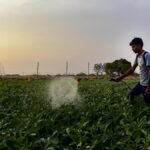

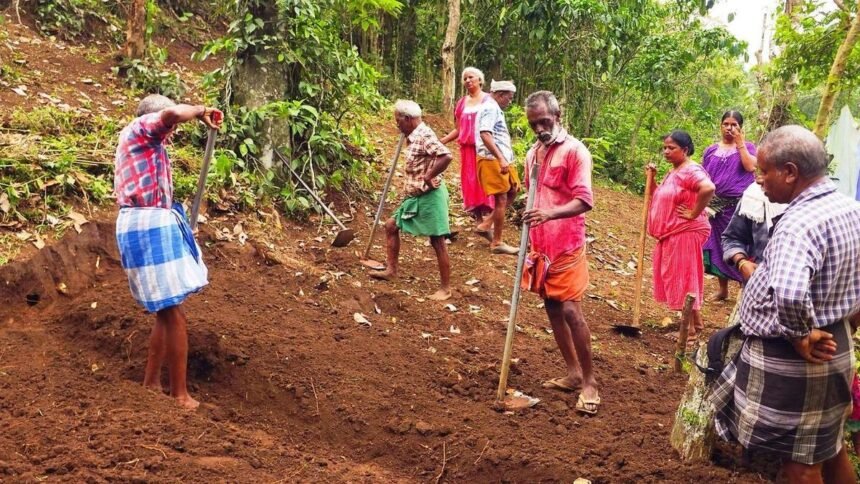
After a gap of 15 years, farming has been resumed on the abandoned lands of the tribal settlements inside the Periyar Tiger Reserve (PTR) at Thekkady in Idukki. Turmeric is being cultivated on the tribal lands this time.
An initiative by the Forest department, the project aims to provide financial stability to the tribal community while reducing instances of human-wildlife conflicts.
Why turmeric?
The cultivation is being resumed under five Eco-Development Committees (EDC) of the PTR, according to an official. “The Alleppey Finger Turmeric (AFT) variety is being used for this initiative. In Paliyakkudy, crops were planted on 1.5 acres on a trial basis. The total area proposed for cultivation is approximately 50 acres for various crops,” the official said.
Officials chose to prioritise turmeric because wild animals generally do not consume the crop. This is a critical factor inside a tiger reserve, where crop-raiding by elephants, wild boar, and other animals has historically led to conflict between tribals and forest department.
Future plans include rejuvenating black pepper farming within the settlements, as well as cultivating cinnamon, Malabar tamarind, clove, nutmeg, and ginger. A wild turmeric variety is also being cultivated on an experimental basis.
Organic practices and ideal conditions
Officials noted that organic farming practices will be followed. The soil has absorbed significant moisture following recent summer rain, making the present conditions ideal for turmeric planting this month.
Last year, the Munnar Forest Division had conducted turmeric farming on abandoned lands, which was a major success. The PTR initiative builds on that experience.
Steady income and forest protection
Officials noted that farming within the forest ensures a steady income for the members of the tribal settlements. “A stable income source will help ensure active participation from the community in forest protection activities.”
This is a key point. Tribal communities living inside tiger reserves have often been viewed as a challenge for conservation. By providing them with sustainable livelihoods – farming crops that wild animals do not eat – the forest department hopes to turn former conflict zones into partnerships for protection.
A model for other reserves?
The Periyar Tiger Reserve is one of India’s most important protected areas, known for its elephant and tiger populations. Balancing the needs of tribal residents with the imperative of wildlife conservation has been a decades-long challenge.
If this turmeric cultivation model succeeds – providing steady income, reducing human-wildlife conflict, and keeping tribals engaged in forest protection – it could be replicated in other reserves across India.
For now, the 1.5-acre trial in Paliyakkudy is a small but significant step. With 50 acres proposed for cultivation, the coming months will show whether this initiative can bear fruit – or in this case, turmeric.