
Sri Lanka is once again turning its attention to green agriculture, but this time with a carefully calibrated approach that aims to avoid the catastrophic failures of the 2021 organic farming mandate.
The new roadmap, unveiled by the Ministry of Agriculture on Wednesday, seeks to transition 30% of the island nation’s cropland to chemical-free or low-chemical farming by 2030.
Learning from the 2021 disaster
In 2021, former President Gotabaya Rajapaksa abruptly banned chemical fertilisers, mandating a complete shift to organic farming overnight. The result was economic catastrophe – rice production fell by 40%, tea exports plunged, and the country was forced to import $450 million worth of rice at the height of its foreign exchange crisis.
The new policy is markedly different. “We learned the hard way that you cannot force a green transition without infrastructure, without farmer support, without a market,” said Agriculture Minister Mahinda Amaraweera.
“2021 was an ideological decision. 2026 is a practical, scientific, and phased roadmap.”
The new green agriculture roadmap
The ‘Sustainable Sri Lanka Agriculture 2030’ plan has four key pillars:
1. Gradual reduction, not ban – Chemical fertiliser use will be reduced by 10% annually, not eliminated overnight. Farmers will receive subsidised organic alternatives alongside smaller quantities of chemicals.
2. Clusters and zones – Specific agro-ecological zones (tea-growing hill country, paddy lands of the north-central province) will be designated for organic transition, leaving other zones on a mixed-input model.
3. Buffer stock – A national buffer stock of chemical fertilisers will be maintained for emergencies. Farmers will not be cut off mid-season as happened in 2021.
4. Premium pricing for organic produce – The government will facilitate export contracts for certified organic tea, spices, and coconut products at premium rates, ensuring farmers earn more for going green.
Pilot programme underway
A pilot programme covering 50,000 hectares across Anuradhapura, Polonnaruwa, and Badulla districts began in March 2026. Early results show a 15% yield drop in paddy but a 40% reduction in input costs, making profitability nearly identical to chemical farming.
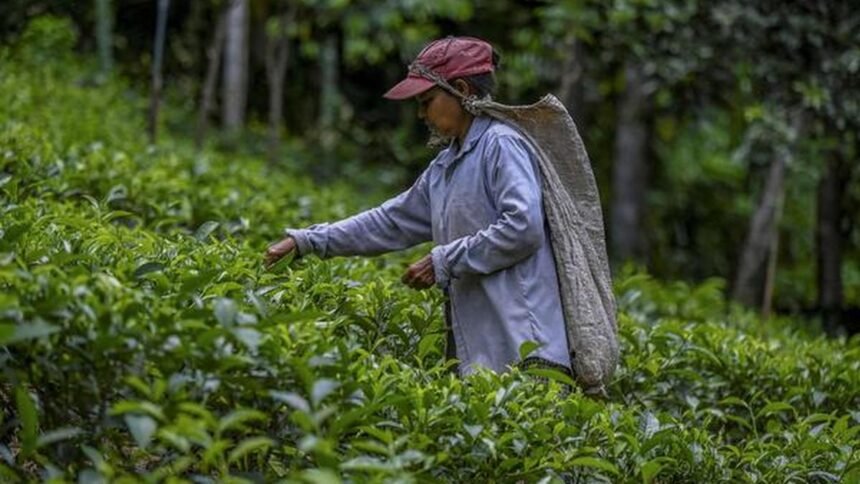
Tea estates in the pilot have reported higher prices from European buyers willing to pay a 25% premium for certified organic Ceylon tea.
“We are not losing money. We are simply earning differently. The soil also feels healthier,” said R.M. Rathnayake, a paddy farmer in the pilot zone.
International support
The World Bank has approved a $200 million loan for Sri Lanka’s green agriculture transition, with specific conditionality on the phased approach and farmer safety nets.
The United Nations Food and Agriculture Organization (FAO) is providing technical assistance on compost production and integrated pest management.
India has also offered cooperation, with the Indian Agricultural Research Institute sharing low-cost organic fertiliser formulations suitable for tropical conditions.
Challenges ahead
Despite the cautious approach, challenges remain. Sri Lanka’s fertiliser subsidy bill currently stands at ₹1,200 crore annually. Shifting to organic substitutes will cost at least 40% more in the initial years.
Small farmers remain sceptical. “They promised us premium prices last time too. Then the economy collapsed and nobody bought anything. I will trust when I see the money in my hand,” said W.S. Dissanayake, a vegetable farmer from Nuwara Eliya.
There is also the question of scale. Sri Lanka requires approximately 300,000 metric tonnes of organic fertiliser annually. Current domestic production capacity is only 80,000 tonnes. The balance must be imported, which reintroduces foreign exchange dependency.
Export potential
The government is betting on export markets. Global demand for certified organic products is growing at 12% annually, with Europe and North America as key destinations.
Sri Lanka already has a brand advantage with Ceylon Tea. If even 20% of tea exports become certified organic, the country could earn an additional $300 million annually.
A realistic path forward
Unlike the 2021 debacle, the 2026 green agriculture roadmap is built on phases, safety nets, and farmer buy-in. Whether it succeeds will depend on consistent implementation across changing governments – historically a challenge in Sri Lankan politics.
For now, the country is eyeing green agriculture with open eyes, not ideological blindfolds.