
By using this site, you agree to the Privacy Policy and Terms of Use.
Accept
ruralconnectnews.comruralconnectnews.comruralconnectnews.com
  • Global Agriculture
  • India Region
  • Farming Industry
  • Agriculture Industry
  • Machinery & Technology
  • Dairy Industry
  • Podcast
  • Advertise
Reading: No Restriction on Indian Mango Imports by Nepal, Clarifies Agriculture Ministry
Share
Notification Show More
Font ResizerAa
Font ResizerAa
ruralconnectnews.comruralconnectnews.com
  • Global Agriculture
  • India Region
  • Farming Industry
  • Agriculture Industry
  • Machinery & Technology
  • Dairy Industry
  • Podcast
  • Advertise
  • Global Agriculture
  • India Region
  • Farming Industry
  • Agriculture Industry
  • Machinery & Technology
  • Dairy Industry
  • Podcast
  • Advertise
Follow US
  • Advertise
© 2026 ruralconnectnews.com Managed By Bolsterflip Media. All Rights Reserved.
ruralconnectnews.com > Blog > India Region > No Restriction on Indian Mango Imports by Nepal, Clarifies Agriculture Ministry
India Region

No Restriction on Indian Mango Imports by Nepal, Clarifies Agriculture Ministry

Rural Connect News
Last updated: 14/06/2026 7:49 AM
Rural Connect News 22 hours ago
Share
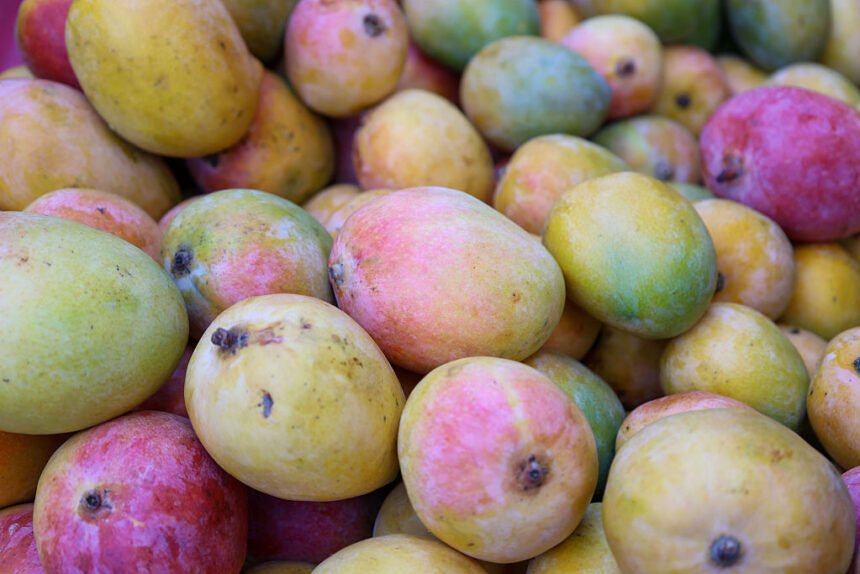
Alphonso mangoes are displayed for sale at a market in Srinagar, Jammu and Kashmir, on June 08, 2026. Japan temporarily suspends imports of fresh mangoes from India for the 2026 season, citing concerns over fumigation and phytosanitary certification procedures at Indian export facilities. Japanese authorities raise issues regarding pest-control treatment protocols and compliance with the country's import regulations. The suspension affects exporters during the peak mango season, particularly those shipping premium varieties such as Alphonso and Kesar mangoes. Indian mango exports also face challenges from ongoing tensions in the Middle East, including disruptions linked to the Israel-Iran conflict and United States involvement in the region, which increase freight costs, delay shipments, and affect exports to key Gulf markets. Despite these setbacks, global demand for Indian mangoes remains strong, driven by their distinctive flavor and quality. (Photo by Firdous Nazir/NurPhoto via Getty Images)
SHARE

The Union Ministry of Agriculture and Farmers Welfare on Wednesday dismissed media reports claiming that Nepal has imposed a ban or suspended imports of Indian mangoes, calling such reports “factually incorrect and misleading” .

Contents
Imports Continue with Phytosanitary ComplianceNew Phytosanitary Measures IntroducedIndia Raises Concerns Over Unilateral MeasuresBackground of the IssueAdvisory to StakeholdersMarket Context

The clarification came after the Government of Nepal, through its Plant Quarantine and Pesticide Management Centre (the country’s National Plant Protection Organisation), confirmed on June 10 that no ban has been imposed on the import of Indian mangoes .

Imports Continue with Phytosanitary Compliance

According to the ministry’s statement, imports of Indian mangoes into Nepal continue to be permitted, subject to compliance with prescribed phytosanitary requirements. Import permits and release orders are being issued by Nepalese authorities upon fulfillment of these conditions and submission of valid phytosanitary certificates issued by the Government of India .

Trade data released by the ministry shows that exports to Nepal have continued without disruption. Since January 2026, India has exported 149 consignments of mangoes totalling 2,005 metric tonnes to Nepal. In June alone, 18 consignments amounting to 266 metric tonnes have already been shipped .

New Phytosanitary Measures Introduced

Nepal has recently revised certain import conditions, including the introduction of a mandatory Hot Water Treatment (HWT) requirement for mango shipments. Under this protocol, mangoes must be treated in water at 48 degrees Celsius for one hour—a standard international practice to eliminate larvae and pathogens .

The treatment is part of Nepal’s biosecurity measures under the Plant Quarantine and Protection Act, 2064, aimed at preventing the entry of high-risk pests. The Nepalese authorities clarified that they regularly conduct Pest Risk Analysis (PRA) and adopt phytosanitary measures based on these assessments .

India Raises Concerns Over Unilateral Measures

While India is facilitating exports in accordance with the revised norms, New Delhi has conveyed its concerns to Kathmandu regarding the introduction of new phytosanitary measures without prior consultation .

The matter is being pursued through appropriate bilateral channels in line with the provisions of the World Trade Organization’s Agreement on the Application of Sanitary and Phytosanitary Measures (SPS Agreement) and the International Plant Protection Convention (IPPC) framework .

Background of the Issue

The clarification follows an incident in which a large consignment of Indian mangoes was temporarily stopped at the Bhittamod Quarantine Check Post in Nepal’s Madhes Province. The shipment was subsequently released after documentation requirements were fulfilled, including the issuance of a plant health certificate from Indian authorities .

Earlier reports had suggested that Nepal had restricted Indian mango imports due to concerns over excessive pesticide residues and lack of adequate quarantine facilities in border areas. However, the Nepalese government has now officially clarified its position .

Advisory to Stakeholders

The Ministry has advised traders, stakeholders, and the public to rely only on official communications for information relating to import and export regulations. It urged them to disregard unverified reports regarding any alleged restrictions on Indian mango exports to Nepal .

Market Context

While locally grown Nepali mangoes are highly regarded for their quality, their production is limited to a short harvest window of around two months, making steady imports from India crucial to meeting consumer demand in the Nepalese market .

India remains the world’s largest producer of mangoes, producing nearly 28 million metric tonnes annually. The clarification from Nepal provides assurance to Indian exporters who had expressed concerns over potential market access restrictions .
You Might Also Like

Why is rice such a water-intensive crop? 

Modi government raises agriculture budget five-fold to ₹1.4 lakh crore in 12 years

West Asia crisis: Export uncertainty hits mango trade, Karnataka farmers explore alternative and local markets

Urea and phosphatic fertilizer supplies ‘remain adequate’ for Kharif season, says Fertilizer Association of India

India entered 1,821 new markets in FY26: Can agri exports keep pace without supply chain reform?

TAGGED: Agriculture Ministry, Hot Water Treatment, India-Nepal trade, Mango exports, phytosanitary measures
Share This Article
Facebook Twitter Email Print
Previous Article Sustainable agriculture key to developed India by 2047, says Om Birla
Next Article 8,710 agricultural cooperative societies set up so far, 27% of target achieved: Shah tells Parliament

About us

Rural Connect News is a dedicated digital news platform committed to amplifying the voice of rural India and connecting Bharat’s heartland with the global stage. We deliver the latest rural news, agriculture updates, development stories, and innovation-led insights that shape the future of villages and farming communities..

Quick Link

  • About us
  • Advertise
  • Disclaimer
  • Privacy Policy
  • Terms and Conditions

Find Us on Socials

© 2026 ruralconnectnews.com Managed By Bolsterflip Media. All Rights Reserved.
Welcome Back!

Sign in to your account

Lost your password?