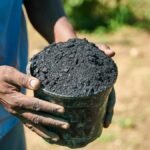


Average global prices of urea jumped almost 141% between May 2025 and May 2026, leading to a sharp escalation in India’s fertiliser subsidy calculations for the current fiscal year . The surge, driven by the West Asia war and supply bottlenecks, has prompted the Ministry of Chemicals and Fertilizers to seek a near-doubling of the subsidy allocation.
The scale of the price surge
The war in West Asia and the closure of the Strait of Hormuz have disrupted global fertiliser trade. Urea prices rose from approximately $419 per tonne in December 2025 to $772 per tonne in April 2026, an increase of over 80% . More recent import tenders have seen India securing urea at $935–$959 per tonne—more than double the year-ago figure of around $410 .
The impact on government finances has been severe. The subsidy burden per bag of urea has risen from around Rs 2,900 to nearly Rs 4,500 . The Budget estimate for fertiliser subsidy in FY27 was Rs 1.71 lakh crore, but the ministry has now sought a 100% increase to approximately Rs 3.4 lakh crore .
Why prices have spiked
Several factors have converged to push global fertiliser prices to record levels:
- Supply disruptions: The Strait of Hormuz closure has choked imports of LNG—critical for domestic urea production—and disrupted shipments of finished fertilisers
- China’s export ban: In mid-March, China banned fertiliser exports to secure domestic supplies, tightening global availability
- Import dependence: India imports roughly 25% of its fertiliser requirement, leaving it exposed to global price volatility . The Gulf nations previously accounted for about 40% of India’s urea imports
Despite the price surge, the government has kept retail fertiliser prices stable to protect farmers. Urea is sold at around Rs 270 per 45-kg bag, while DAP is capped at Rs 1,350 per 50-kg bag .
Measures to manage the crisis
The government is pursuing multiple strategies to mitigate the impact:
Securing supplies – State-owned National Fertilizers Ltd issued a global tender for 1.7 million tonnes of urea in late May . India is also looking to increase imports from Russia and diversify its supplier base .
Boosting domestic production – A new investment policy aims to add 9–10 million tonnes of urea production capacity over the next eight years through seven new units, potentially saving over ₹10,500 crore annually in subsidies . Domestic fertiliser production has already increased from 384 lakh tonnes in 2020-21 to 465 lakh tonnes in 2024-25 .
Stockpiling – The government has built up substantial buffer stocks. For the current Kharif season, 197.56 lakh tonnes of fertiliser is available against a reassessed requirement of 383.9 lakh tonnes—more than 51% of demand, significantly higher than the usual 33% .
Fiscal implications
Despite the pressure, the government is not planning any supplementary demand for grants in the upcoming Monsoon Session . The FY27 Budget had earmarked ₹1 trillion under an Economic Stabilisation Fund to address unforeseen shocks . However, economists warn that the additional subsidy outgo, coupled with fuel excise cuts, could strain fiscal consolidation efforts if elevated prices persist .