

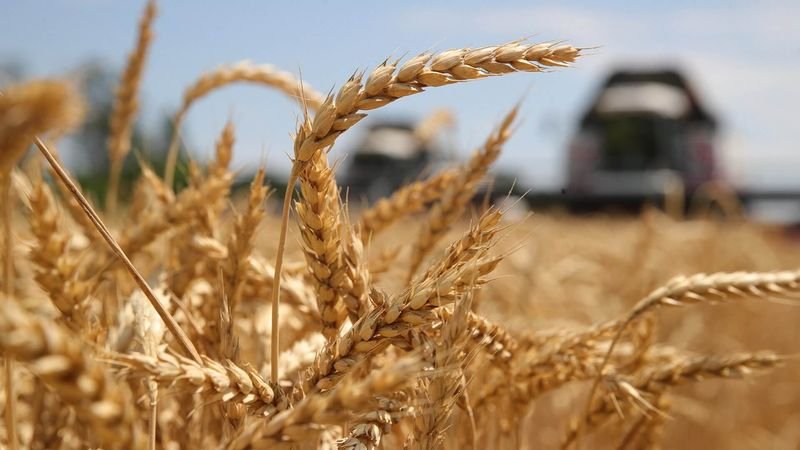
The U.S. Department of Agriculture increased its production estimate by 600,000 tons, reflecting expanded planted area and improved weather conditions
The U.S. Department of Agriculture (USDA) has raised its forecast for Argentina’s 2026/27 wheat production to 21.6 million tons, up 600,000 tons from its April estimate. The revision reflects a 200,000-hectare increase in planted area, with the harvested area now expected to reach 6.6 million hectares.
USDA’s Foreign Agricultural Service (FAS) said improved weather in previously dry regions and lower production costs encouraged farmers to expand late wheat plantings. By mid-July, more than 90% of the planned area had already been sown.
Production Outlook
Despite the upward revision, Argentina’s wheat crop is still projected to be 6.3 million tons smaller than the record 2025/26 harvest. According to FAS, the decline reflects last season’s exceptionally high yields rather than weaker production prospects.
The 2025/26 season saw record-breaking production, making the current season’s comparison less favorable. However, the 2026/27 forecast of 21.6 million tons still represents a strong crop by historical standards.
Export Forecasts
FAS also raised its forecast for Argentina’s 2026/27 wheat exports to 15.5 million tons, an increase of 500,000 tons from the previous outlook. Meanwhile, the export estimate for the 2025/26 season was lowered to 18.5 million tons, although it remains a record level for the country.
According to the agency, the lower protein content of last season’s wheat has reduced Argentina’s competitiveness in premium food wheat markets. This quality issue has implications for export destinations, as buyers seeking high-protein milling wheat may look elsewhere.
Brazilian Demand
Brazil, Argentina’s largest wheat buyer, is expected to import around 4–4.5 million tons of Argentine wheat this season, slightly below its usual purchasing volumes. Brazil’s domestic wheat production and its own import requirements will influence the final volume, but the slightly reduced demand from its key market could affect Argentina’s export dynamics.
Market Implications
The upward revision in Argentina’s wheat production forecast could add to global wheat supply expectations. However, the quality differential between the previous and current seasons, along with reduced demand from Brazil, may affect how Argentine wheat is positioned in the global market.
For global grain traders and buyers, the USDA’s latest numbers provide a clearer picture of South American supply, though the focus will remain on weather developments in the coming months as the crop progresses toward harvest.