

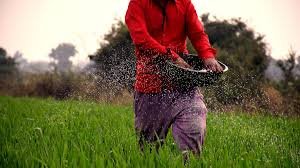
Advances in agricultural technology have made tremendous inroads into the agricultural sector, enhancing production manifold and creating innovative solutions to modern farming challenges, experts at a webinar have said .
They were speaking on the topic ‘Agriculture Technology Revolution’, jointly organised by SRM Institute of Science and Technology (SRMIST) and The Hindu as part of their Future Career Conversations series .
Farm mechanisation reaches 47%
Devinder Dhingra, Principal Scientist (Process Engineering), Agricultural Engineering Division, Indian Council for Agricultural Research (ICAR), said that 47% of farm work was now mechanised, and that the introduction of scientific methods has led to surplus production, which has resulted in agricultural produce being exported .
While mechanisation of harvesting horticulture crops continued to pose a challenge, harvest of field crops has been largely mechanised, and farmers were using precision equipment for the same .
“Drones are being actively used for crop management and spraying of pesticides,” Dr. Dhingra said, adding that crop storage mechanisms have undergone tremendous changes as well .
Customised solutions for local conditions
Poorna Pushkala, CEO, Samunnati Foundation, said the sector has been bolstered by multiple decentralised energy systems and various agri-tech innovations .
“We have highly customised solutions available for climatic and geographical conditions now. Several post-harvest technologies are also available in the market created by students or professionals with less than five years of experience,” she noted. Anybody with a passion to solve problems innovatively would have a space in agriculture, she added .
AI, IoT and smart agriculture
Leenus Jesu Martin M., Dean, Faculty of Engineering and Technology, SRMIST, said that agriculture, initially a stand-alone discipline, was now a multi-disciplinary field with mechanical, automation, and computing engineers all playing a big role in the mechanisation process .
“Artificial Intelligence and Machine Learning,” he said, “formed the basis of smart agriculture and the Internet of Things played a role in connecting various farm jobs” .
Jawaharlal M., Dean, SRM College of Agriculture Sciences, said that almost all branches of engineering and technology could be linked to agriculture. While collective and cooperative farming systems benefit workers, high-value crops could be produced in low volume if technology was linked to farming, he added .
AI sorting reducing post-harvest losses
Beyond the webinar, real-world examples of agri-tech impact are emerging across the country. AI-powered crop grading systems like Agrograde have achieved over 96% defect detection accuracy, reducing post-harvest losses by up to 90% and cutting grading costs significantly .
Farmer Producer Organisations using this technology have doubled daily shipments and accessed premium domestic and export markets . The system uses computer vision and precision handling to standardise quality assessment, removing subjectivity from pricing and strengthening buyer trust .
ICAR’s contribution to post-harvest technology
The Indian Council of Agricultural Research has also played a transformative role in agro-processing. ICAR-CIAE, Bhopal has developed around 100 agro-processing technologies including grain cleaners, dal mills, millet processing machinery, onion storage systems, and evaporative cooling systems .
Around 45 of these technologies have been licensed and commercialised to more than 75 manufacturers, generating significant economic benefits. Impact assessment studies revealed that 19 ICAR-CIAE technologies generate an estimated national benefit of ₹14,070 crore annually .
Way forward
Experts at the webinar emphasised that as agriculture becomes increasingly technology-driven, career opportunities for engineers, data scientists, and innovators will continue to expand. The integration of robotics, AI, and IoT with traditional farming practices represents the future of Indian agriculture .
A.M. Jigeesh, Senior Deputy Editor of The Hindu, moderated the webinar