

Chicago: It’s hard to remember when encountering the word “protein” wasn’t a daily occurrence in a restaurant commercial or a social media influencer’s post. Consumer demand for protein has reached a frenzy at the intersection of the Make America Healthy Again movement, the rise in GLP-1 drug use, and updated Dietary Guidelines for Americans that doubled daily protein recommendations .
But what does this mean at the farm level? Farmers are capitalizing on the demand, and Successful Farming examined two protein sectors — one animal, one plant — to see how producers are meeting the moment .
Dairy’s Prime Position
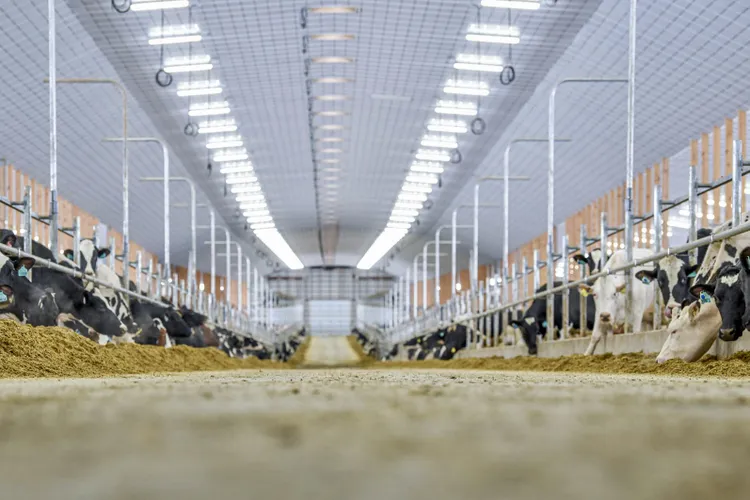
The dairy industry is well positioned to meet growing protein demand, and it started with butterfat. Butterfat and protein determine about 90% of the value of a milk check. Corey Geiger, lead dairy economist for CoBank, noted that average butterfat content in the nation’s milk supply increased from 3.66% in 2010 to 4.29% in 2025 — “an unprecedented shift” .
Producers were rewarded, with butterfat leading all milk components in price from February 2023 through August 2025 for all but one month. Beginning in the fall of 2025, protein took that lead. “Since September, protein has been higher per pound, so the reward in the milk check is for making more protein,” Geiger said. “I see that trend remaining strong here for the next couple of years as we strive to meet consumer demand” .
Dairy farmer Jonathan Lamb, a partner at Oakfield Corners Dairy in northwest New York, said the protein boom is readily apparent in the Northeast due to investment in dairy processing. “The lion’s share of the processing capacity investments are taking place in higher-protein products,” he said. “It’s not going away anytime soon. It’s not a short-term fad” .
Geiger noted that the fastest-growing categories of high-protein dairy foods are cottage cheese, high-protein dairy shakes and yogurt — half of which is sold as Greek style. Whey protein isolate and nonfat dry milk are also at record highs. Parmesan production was up more than 26% through the first quarter of 2026 .
Long-Term Benefits for Dairies of All Sizes
Regardless of size, dairy farms can capitalize on the protein boom. “If I have 50 cows, 200 cows, or 2,000 cows, I have access to the same bulls in genetics,” Geiger said. “It’s just the buying decisions I make” .
The Pulse Opportunity
On the plant side, pulse crops — dry peas, chickpeas, dry beans and lentils — are gaining attention. Planted acres of yellow peas have risen 55% over the past 15 years, according to USDA data. At the same time, U.S. yellow pea exports dropped 81% between 2021 and 2025, showing the additional crops are being consumed domestically .
Aaron Smith, a fifth-generation pea and lentil farmer in northern Idaho, said the rise of GLP-1 medications and the social media protein craze may be his farm’s only path to profit this year. “We’ve been waiting for this moment to happen,” he said, noting he is swapping wheat acres for pulses .
McKade Mahlen, a fourth-generation farmer in Montana, estimated he’ll lose roughly $35 for every acre of wheat planted, but will make $8 for every acre of lentils. “Finally, we’ve found something that has a positive margin for us,” he said .
Many farmers already rotate grain plantings with pulses to prevent disease and imbue the soil with nitrogen, reducing fertilizer needs — a quality that has made them more attractive as the U.S.-Iran conflict chokes off fertilizer supply. “Pulses have the most hope for coming out of this in better shape because input costs are so low,” said Tim McGreevy, CEO of USA Pulses .
The Nutrition Reality Check
Nutrition experts said the protein boom is out of step with actual dietary needs. The average American already eats one gram of protein per kilogram of bodyweight, according to Johns Hopkins University — more than the 0.8 grams per kilogram recommended by many experts. The U.S. Department of Health and Human Services controversially raised its recommended daily intake to 1.2–1.6 grams per kilogram in January .
“There is no epidemic of protein underconsumption. You don’t need protein water, protein waffles, protein chocolate,” said Stuart Phillips, a nutrition researcher at McMaster University .
“Marketers of protein are exploiting this,” said Marion Nestle, professor of nutrition at New York University. “It’s nutritionally hilarious” .