

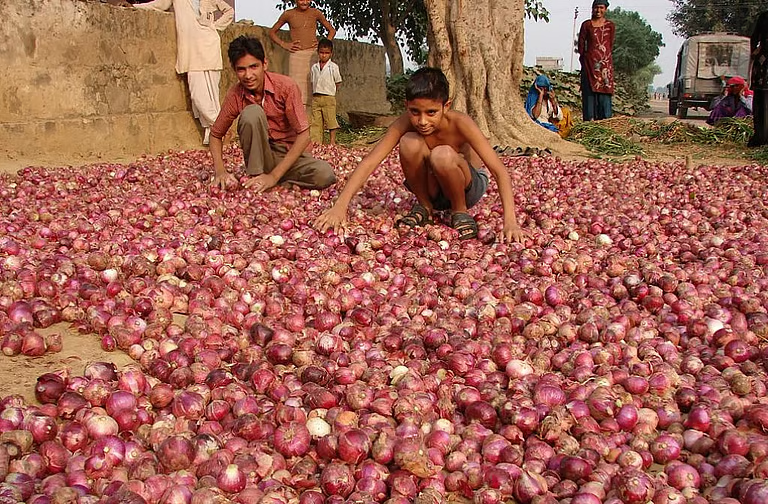
Reports from different parts of the country are once again making headlines. A farmer in Maharashtra reportedly received just Re 1 for 25 bags of onions. Farmers in Uttar Pradesh ran tractors over standing potato crops unable to secure fair prices. In Karnataka, frustrated farmers emptied tomatoes into an enclosure for sheep and goats.
Almost all crops are being sold below the minimum support price. These incidents have emerged even as food inflation rose from 3.87% in March to 4.20% in April 2026.
The wholesale-retail disconnect
In mandis, farmers are being forced to sell onions at just Rs 5 to Rs 7 per kg. Yet the all-India average retail price of onion on May 12, 2026 was Rs 25.36 per kg – up from Rs 23.63 a month earlier.
Similarly, potato retail price was Rs 20.86 per kg on May 12, compared with Rs 19.06 a month earlier. Tomato prices jumped from Rs 25.28 to Rs 34.85 per kg in the same period.
Farmer’s shrinking share
Taking Maharashtra as a whole, the average wholesale price of onions in the second week of May was Rs 933.30 per quintal. The average retail price was Rs 21.63 per kg. This means farmers received only 43% of the retail price.
The same old reasons are being cited: bumper production, bad weather, and lack of cold storage. These factors mean farmers are forced into distress sales. But prices for consumers are not falling.
Why the Price Stabilisation Fund matters
The central government launched the Price Stabilisation Fund (PSF) in 2014-15. Its aim is to purchase onions during peak production and later make them available to consumers at controlled prices during shortages.
According to a Consumer Affairs Ministry report, procurement under the PSF increased from just 9,000 metric tonnes in 2015-16 to 638,000 metric tonnes by 2023-24. The result: farmers’ share of every rupee paid by consumers increased from 45% to 54%. Farmers received prices 3% to 19% higher than market rates. Retail onion price volatility in Delhi decreased by 24%.
But procurement remains too small
In 2023-24, only 6.38 lakh metric tonnes of onion were purchased under the PSF, while the country’s total onion production was more than 300 lakh metric tonnes. This means government procurement was limited to only 1% to 2% of total production.
What needs to change
The study report recommends that the PSF be developed not just as a crisis management plan, but as a permanent market stabilisation mechanism. It highlights the need for scientific storage, affordable sales in rural and semi-urban markets, expansion of the transport network, and an increase in procurement centres at the state level.
Until then, Indian farmers will continue to dump their produce, while families pay high prices for the same vegetables at their local markets.