
With government support and rising demand, aquaculture offers a profitable opportunity for new entrepreneurs
India is the world’s second-largest fish producer, contributing around 8% of global output . The fisheries sector supports nearly 3 crore fishers and fish farmers, making it a vital pillar of the rural economy . With total fish production reaching approximately 197.75 lakh tonnes in 2024-25, the sector has grown by over 100% in the last decade . Here is a complete guide to starting your fish farming business.
Why fish farming is a good business opportunity
Fish farming, also known as aquaculture or pisciculture, involves breeding, raising, and harvesting fish in controlled environments . The Indian fish market was valued at 22.32 million tonnes in 2024 and is projected to reach 43.77 million tonnes by 2033, growing at a compound annual growth rate of 7.38% .
Key advantages:
- High demand: Fish is a staple in many Indian households, with more than 60% of domestic production consumed locally
- Quick returns: Species like pangasius and tilapia can be harvested in 6-8 months
- Scalable: Start small and expand gradually
- Government support: Subsidies available through multiple schemes
Step 1: Choose your farming method
The most common fish farming methods in India include:
Pond fish farming is the traditional and most widely used method, suitable for rural and semi-urban areas with open land. It involves constructing earthen ponds and controlling water quality. This is a low-cost, conventional approach ideal for freshwater fish .
Tank-based or Recirculating Aquaculture Systems (RAS) are modern, space-efficient techniques that allow high-density production in controlled environments. These systems recycle and reuse water, making them suitable for urban or indoor farming. Biofloc technology is a popular type of RAS. The initial investment is higher, but yields and control over production are significantly better .
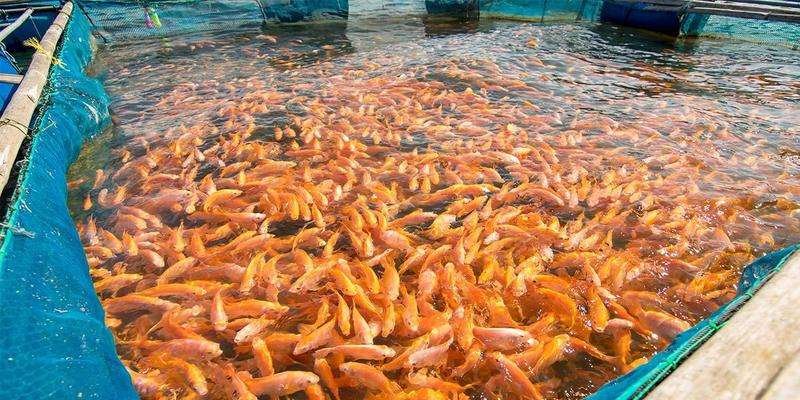
Cage culture involves raising fish in nets or enclosures placed in natural water bodies like lakes, rivers, or reservoirs. This method has low capital costs and medium yields, but requires permission from local authorities .
Integrated fish farming combines fish production with other agricultural activities such as poultry, livestock, or crop cultivation. Waste from one system is used as input for another, creating a sustainable and cost-effective ecosystem .
Ornamental fish farming is a specialized niche focusing on breeding and selling aquarium fish. It can offer healthy profit margins under proper management .
Step 2: Select a suitable location
Location is critical for success. Consider the following factors:
Water source: Ensure consistent access to clean, uncontaminated water from a borewell, river, or canal. Check water quality parameters like pH, dissolved oxygen, and temperature .
Soil type: Clayey or loamy soil with high water-retention capacity is ideal for pond farming .
Topography: Gently sloping terrain facilitates water management and drainage .
Proximity to market: Close proximity ensures freshness of produce and reduces transportation costs .
Electricity: Essential for aerators, pumps, and other equipment .
Legal compliance: Verify that the site complies with local environmental and zoning regulations .
Step 3: Choose the right fish species
India offers a wide variety of fish species suitable for aquaculture .
Indian Major Carps (Catla, Rohu, Mrigal): These are in great demand, grow quickly, and can be raised in polyculture (cultivating multiple species together) .
Exotic Carps (Common Carp, Silver Carp, Grass Carp): These species are known for their quick growth and adaptability .
Tilapia: This fish has a rapid growth rate, high protein content, and adaptability to various water conditions. Monosex GIFT Tilapia is especially popular in biofloc systems .
Catfish (Pangasius, Magur): These are hardy species that can withstand reduced oxygen levels, making them suitable for various aquaculture setups .
Step 4: Prepare your farm infrastructure
For pond farming, the pond size should be at least 300 square meters, with a water depth of 60-90 cm . The ideal shape is rectangular or square. Deeper ponds (1.5-2 metres) may help reduce evaporation in warmer regions .
- Site levelling and embankment construction
- Installation of inlet and drainage pipes
- Liming (200-250 kg per acre before filling)
- Water filling and retention monitoring
Step 5: Source quality fish seed (fingerlings)
Purchase healthy juvenile fish from a certified government hatchery or a reputable private hatchery to ensure good stock health and growth . Prices may range between ₹0.30 to ₹1.50 per fingerling depending on species and size .
What to check before purchase :
- Hatchery certification documents
- Uniform fingerling size
- Active movement and healthy appearance
- Absence of lesions or white patches
Step 6: Manage water quality and feeding
Regular monitoring of water quality parameters is essential .
| Parameter | Ideal Range | Corrective Action |
|---|---|---|
| pH | 7.0–8.5 | Apply lime if below 7; partial water change if above 9 |
| Dissolved Oxygen | Above 5 mg/L | Increase aeration and reduce stocking density |
| Ammonia | Below 0.5 ppm | Reduce feed and add beneficial bacteria |
| Temperature | 25–32°C | Use shade nets or deeper water |
Feeding: Healthy and timely feeding ensures fish receive essential nutrients. Procure feed from reliable sources and follow recommended feeding schedules .
Step 7: Harvesting and marketing
Fish can be harvested after 6-8 months by draining or partially draining the pond, or by using a seine net with a mesh size of 3-3.5 cm .
Marketing channels:
- Local fish markets
- Wholesale buyers
- Restaurants and hotels
- Export companies
Investment required
The cost of starting a fish farm varies significantly based on method and scale .
For a small 1-acre pond farm:
| Expense | Approximate Cost |
|---|---|
| Pond construction | ₹1,50,000 |
| Fingerlings (2,000-3,000) | ₹10,000–15,000 |
| Feed (6-8 months) | ₹60,000 |
| Equipment | ₹15,000 |
| Labour | ₹30,000 |
| Miscellaneous | ₹20,000 |
| Total | ₹2,80,000–3,50,000 |
For tank-based RAS or biofloc farming, the cost may go up to ₹5-6 lakh, but yields and control over production are also higher .
Government schemes and subsidies
The Indian government offers significant support for aquaculture development .
Pradhan Mantri Matsya Sampada Yojana (PMMSY): The flagship scheme provides financial assistance for infrastructure, technology adoption, and value-chain development. As of July 2025, projects worth ₹21,274 crore have been approved under the scheme .
Pradhan Mantri Matsya Kisan Samridhi Sah-Yojana (PM-MKSSY): This sub-scheme offers:
- One-time insurance premium incentive (40% of premium, up to ₹25,000 per hectare)
- Performance grants for micro and small enterprises (up to 35% of investment, ₹45 lakh for women-owned enterprises)
Kisan Credit Card (KCC): Facilities are available for recurring agricultural and aquaculture working capital requirements .
NABARD-linked schemes: Support for hatchery, nursery, and aquaculture infrastructure projects through participating financial institutions .
Expected profitability
Fish farming can be highly profitable with proper management.
- Fingerlings: 3,000
- Harvest quantity: 2,550 kg (15% mortality)
- Wholesale price: ₹90/kg
- Gross revenue: ₹2,29,500
- Operating cost: ₹90,000–1,10,000
- Estimated net income: ₹1,19,500–1,39,500 per cycle
Financing options
Several financing options are available for fish farmers: